How Real-Time AI Translation Improves International Education
Breaking Language Barriers in COIL Programs, International Classrooms, and Global Learning
TL;DR
As universities welcome more international students and expand collaborative learning programs, language barriers can limit participation, understanding, and collaboration. Real-time AI translation captions allow instructors to teach in their preferred language while students follow the lecture in their own language. EventCAT makes multilingual learning accessible through QR-code-based live captions without requiring any app installation helping institutions create a more inclusive and engaging global classroom.
Why Real-Time AI Translation Matters in International Education
International education is no longer measured only by the number of international students a university enrolls. Increasingly, success depends on whether every student can actively participate and achieve the same learning experience, regardless of their native language.
According to South Korea's Ministry of Education, the number of international students in higher education increased from approximately 153,000 in 2020 to 253,000 in 2025. As institutions become more globally connected, universities are expanding initiatives such as:
Collaborative Online International Learning (COIL)
Student exchange programs
International research collaborations
Project-Based Learning (PBL)
Guest lectures by overseas experts
These initiatives create valuable opportunities for cross-border collaboration, but they also introduce one common challenge: language.
Even when everyone attends the same class, differences in language proficiency can affect comprehension, confidence, and classroom participation, ultimately influencing the overall learning experience.
Common Language Challenges in a Global Classroom
Creating a successful global classroom involves more than bringing together students from different countries. Every participant should have an equal opportunity to understand the lesson, contribute to discussions, and collaborate with peers.
However, multilingual learning environments often face challenges such as:
Difficulty understanding specialized academic terminology
Lower participation during Q&A sessions and group discussions
Reduced confidence when presenting ideas
Pressure to select a single instructional language for diverse audiences
Without effective language support, students may understand the lecture differently despite receiving the same instruction.
Challenges for Instructors, Students, and Program Coordinators
Language barriers affect everyone involved in international education.
For Instructors
Many faculty members feel pressure to teach in a second language, even when they are experts in their field.
Common challenges include:
Teaching outside their native language
Slower lecture delivery due to language considerations
Focusing more on communication than teaching itself
For Students
Students often struggle to participate confidently when instruction is delivered in a language they are still learning.
This can lead to:
Difficulty following complex lectures
Missing technical or discipline-specific terminology
Less participation during discussions, presentations, and team projects
As a result, student engagement can decline even when students are academically capable.
For International Program Coordinators
Program organizers also face operational challenges.
These often include:
High interpreter and translation costs
Limited language coverage due to budget constraints
Inconsistent interpretation quality across different programs
Can Professors Teach International Classes Without Speaking Multiple Languages?
Yes.
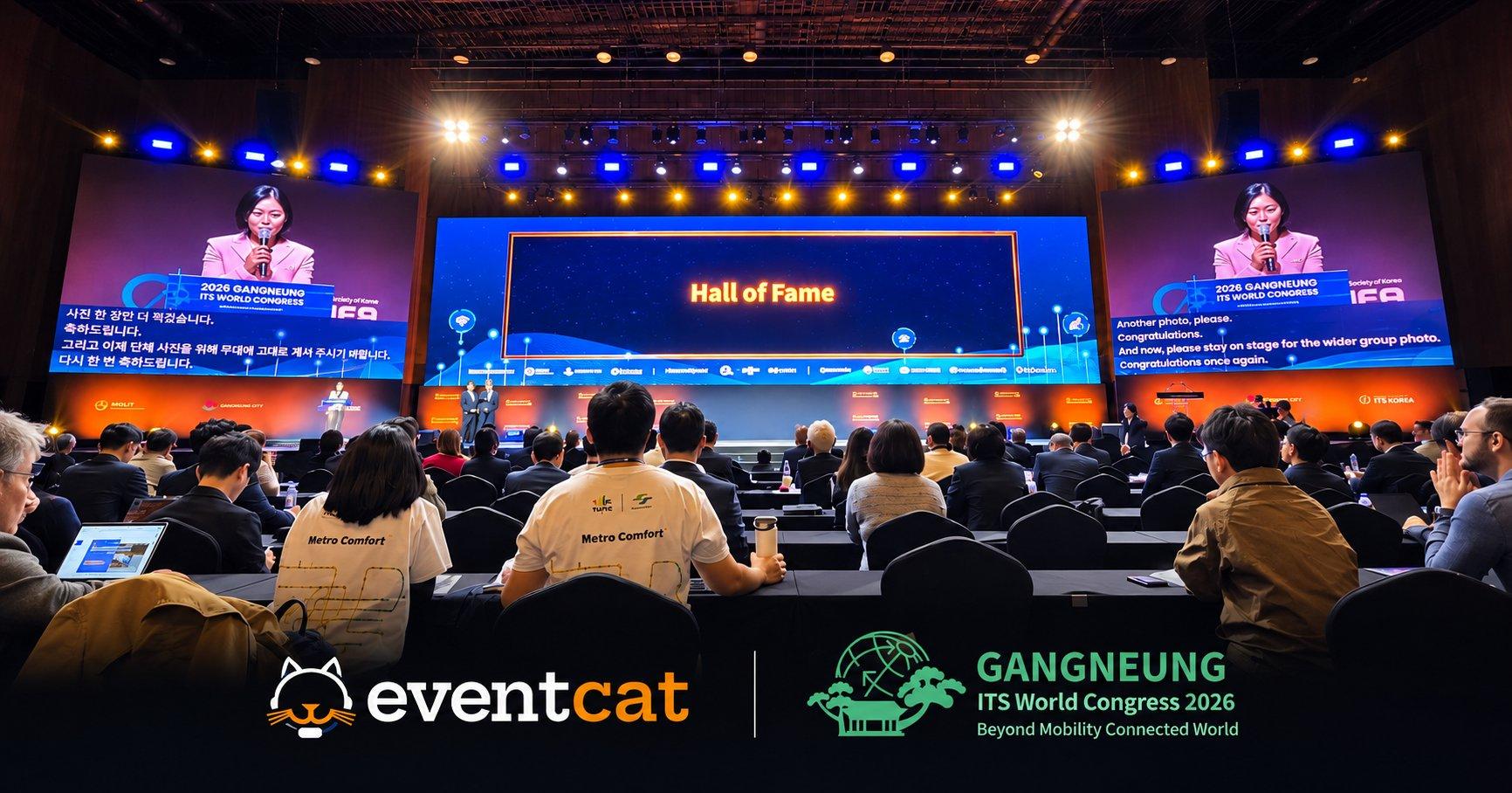
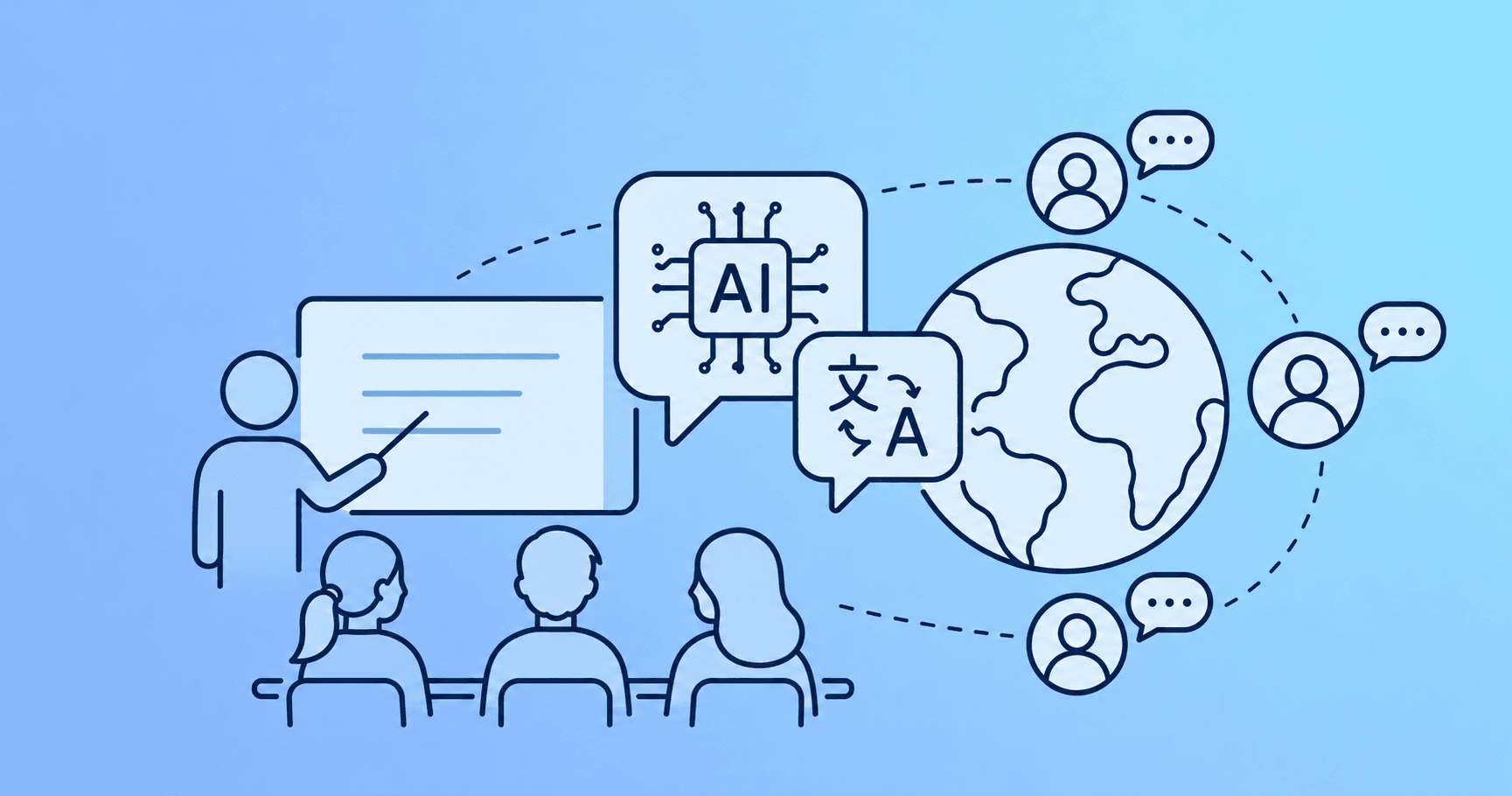
With real-time AI translation captions, instructors can continue teaching in the language they are most comfortable using while students read live translated captions in their preferred language on their own smartphones.
EventCAT enables students to access multilingual captions simply by scanning a QR code, no app installation required.
Because the translation is delivered directly through a web browser, instructors can focus on teaching instead of language concerns, while students can concentrate on understanding the content rather than translating it themselves.
This approach is particularly valuable for:
International student courses
COIL programs
Global workshops
Exchange programs
International seminars and conferences
By removing language barriers, universities can significantly improve educational accessibility while creating a more inclusive learning environment.
Traditional International Classes vs. AI-Powered Multilingual Learning
Traditional International Classes | EventCAT with Real-Time AI Translation |
English-only instruction | Instructors teach in their preferred language |
Students rely on translation apps | Live AI captions in each student's language |
Limited classroom participation | More interactive discussions and Q&A |
High interpretation costs | Scalable multilingual support |
Language barriers reduce collaboration | Improved collaboration and student engagement |
Real-World Examples of AI Translation in Higher Education
Yonsei University Korea–Japan Debate Course
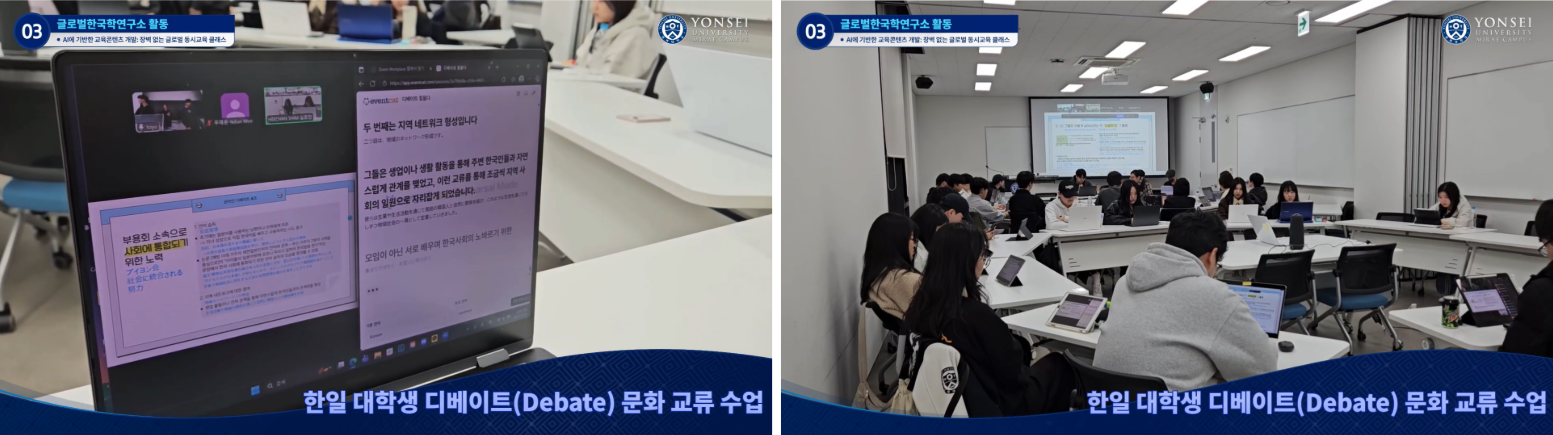
Yonsei University's Underwood International College introduced EventCAT during a collaborative debate course with Toyo University in Japan.
Students followed real-time captions in their own language throughout the discussions, while instructors conducted the class without requiring on-site interpreters. The result was smoother communication and more active participation.
K-Science Global STEM Talent Program
STEM education often involves complex scientific terminology that can make language barriers even more challenging.
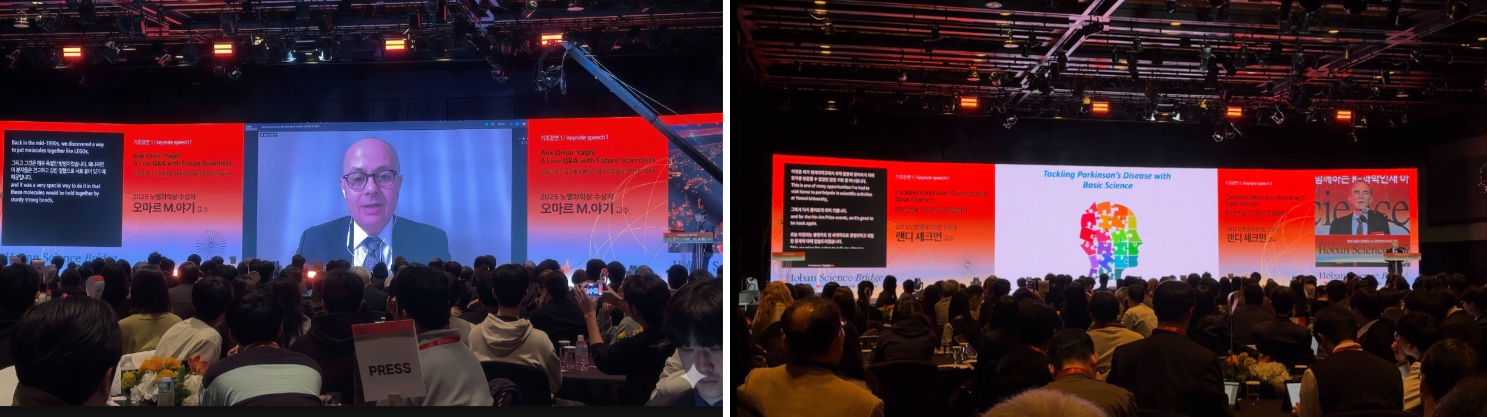
During the K-Science Talent Academy Vision Declaration Ceremony, EventCAT provided real-time AI translation captions so Korean students could fully understand presentations delivered by international scientists and researchers.
Students also participated in multilingual Q&A sessions, making scientific knowledge more accessible while improving learning accessibility across languages.
GCSC Korea–Japan Global Startup Camp
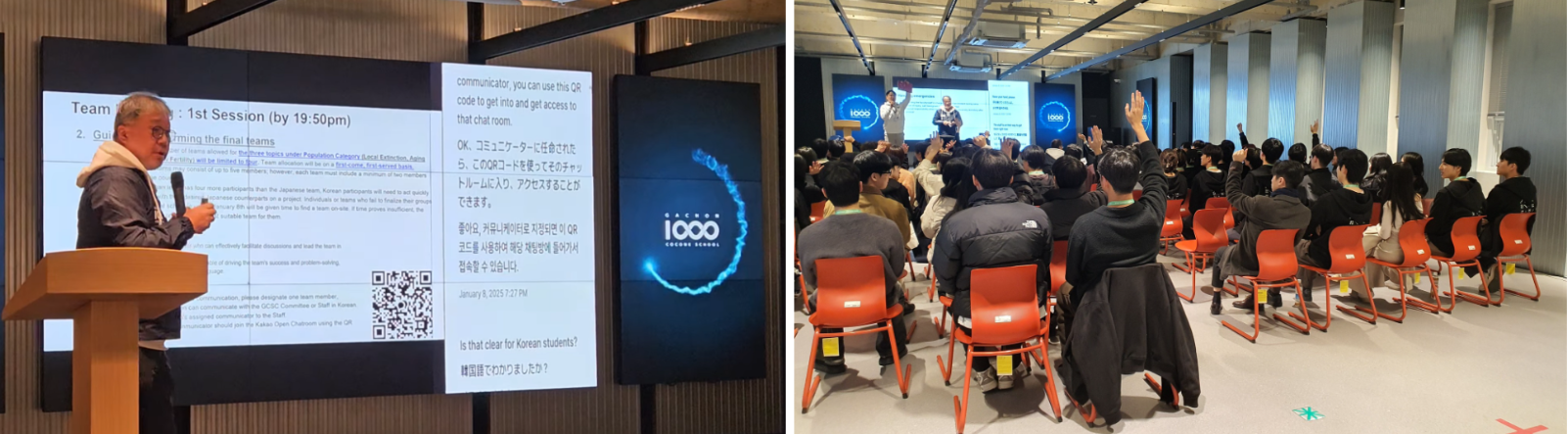
The Global Campus Startup Camp (GCSC) brings together Korean and Japanese students to collaborate on innovative solutions to social challenges.
Using EventCAT, participants joined mentoring sessions, presentations, and team discussions in their preferred language.
Instead of focusing on translation, students focused on exchanging ideas, leading to stronger collaboration and higher student engagement.
How to Use Real-Time AI Translation in International Education
Implementing multilingual learning with EventCAT is simple.
Create a session on the EventCAT website.
Share the automatically generated QR code with participants.
Students scan the QR code using their smartphones.
Each participant selects their preferred language.
As the instructor speaks, AI generates live translated captions.
Students follow the lecture in real time on their own devices.
No application download or dedicated hardware is required.
FAQ
Does EventCAT require students to install an app?
No. Participants simply scan a QR code and access live captions through their web browser.
Can EventCAT be used for online classes?
Yes. EventCAT Online Meeting supports major virtual learning platforms, including Zoom, Google Meet, and Microsoft Teams.
Does EventCAT provide speech as well as captions?
Yes. In addition to Speech-to-Text (STT), EventCAT also supports Text-to-Speech (TTS), allowing participants to listen to translated content in their preferred language.
How many languages does EventCAT support?
EventCAT supports more than 50 languages, including English, Korean, Japanese, and many others, making multilingual communication accessible for universities worldwide.
Inclusive Education Starts with Equal Understanding
The future of international education is not simply about connecting more countries.It is about ensuring every learner has access to the same educational opportunities.
When language barriers are reduced, students ask more questions, collaborate more confidently, and participate more actively. Institutions can build stronger inclusive education practices while improving learning accessibility for everyone.
Real-time AI translation is becoming essential infrastructure for modern international education, supporting COIL programs, exchange courses, global workshops, and multilingual classrooms around the world.
EventCAT is committed to helping universities and educational institutions create more inclusive, accessible, and engaging global learning environments.
Interested in bringing multilingual learning to your institution?
Contact us for a free demo at contact@eventcat.com