
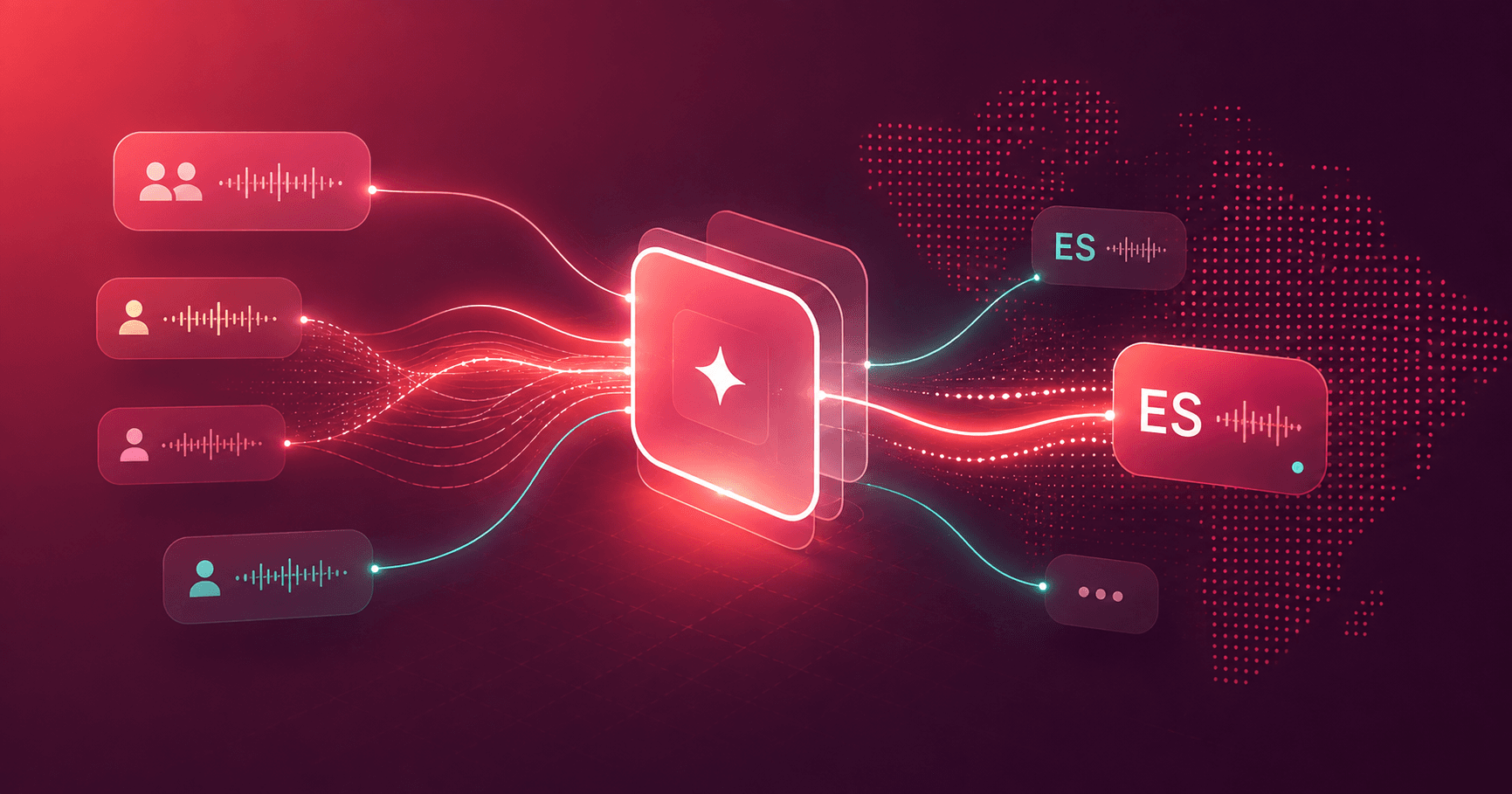
How AI Is Transforming Real-Time Communication for Spanish-Speaking Audiences
More organizations are hosting multilingual webinars, conferences, and hybrid events for Spanish-speaking audiences than ever before.
The challenge is no longer translating documents.
It is helping people understand live conversations as they happen. This shift is changing how organizations communicate across Latin America, Spain, and global Spanish-speaking communities.
AI is moving from static translation to real-time communication.
For the Hispanic market, this evolution is especially important. Spanish is one of the most widely spoken languages in the world, and Hispanic audiences are increasingly participating in global webinars, international conferences, online education, business meetings, startup events, and hybrid experiences. As these interactions become more global, the need for instant, accessible, and scalable multilingual communication becomes much more urgent.
Today, AI is no longer just helping people understand written words. It is helping audiences follow live conversations, presentations, panels, and meetings in their preferred language.
From text translation to real-time interaction
The first wave of AI translation helped people overcome language barriers in written communication. A company could translate a website into Spanish. A professional could understand an email written in English. A student could read an article in another language.
That was useful, but it was limited.
Live communication is more complex. In a webinar, conference, or meeting, people need to understand what is being said as it happens. They cannot wait hours or days for a translated transcript. They need access in the moment, especially if they are attending a live session, asking questions, networking, or making business decisions.
This is where AI-powered real-time interpretation and live subtitles are changing the experience.
Instead of treating translation as something that happens after the event, AI makes multilingual access part of the event itself. A speaker can present in English while attendees follow in Spanish. A panel can include participants from different countries. A company can host a product demo for audiences in Latin America, Europe, and Asia without turning language into a barrier.
Why this matters for the Hispanic market
The Hispanic market is not one single audience. It includes Latin America, Spain, Spanish-speaking communities in the United States, and global professionals who use Spanish as their primary language. These audiences are diverse, digitally active, and increasingly connected to international opportunities.
For companies, universities, event organizers, and communities, this creates a major opportunity. A webinar that was previously limited to English-speaking attendees can become accessible to Spanish-speaking audiences. A conference can reach participants from Mexico, Colombia, Chile, Argentina, Spain, and other markets. A startup can present its product to international investors or customers without requiring every participant to speak the same language.
But there is also a challenge:
Traditional interpretation can be expensive, complex, and difficult to scale. It often requires advance coordination, professional interpreters, technical setup, and sometimes specialized equipment. For large conferences, that may be possible. For smaller webinars, startup events, internal meetings, educational programs, or hybrid sessions, it can be harder to justify the cost and logistics. AI makes multilingual communication more accessible. It allows more organizations to experiment with bilingual and multilingual formats, even when they do not have the budget or infrastructure of a large international conference.
AI as a bridge, not just a translation tool
Live AI communication is changing how people participate.
Instead of translating after an event, organizations can remove language barriers while conversations are happening.
This improves engagement, accessibility, and collaboration across borders.
It helps a speaker reach a broader audience. It helps attendees participate with more confidence. It helps organizers create events that feel more international and accessible. It can also help teams reuse event content after the session by turning live conversations into multilingual transcripts, subtitles, or summaries.
For Hispanic audiences, this can be especially powerful.
A professional in Mexico can attend a product demo hosted in English. A student in Colombia can follow a lecture from an international expert. A business team in Spain can join a multilingual meeting with partners in Asia. A startup in Latin America can present to global investors while making the session accessible to Spanish-speaking stakeholders.
The value is not only translation. The value is participation.
Where EventCAT fits in
EventCAT is designed for this new era of live multilingual communication.
Instead of limiting translation to documents or post-event materials, EventCAT helps organizers bring real-time interpretation and subtitles directly into meetings, webinars, conferences, and live events. This allows speakers and attendees to communicate across languages with less friction.
For organizations trying to reach Hispanic audiences, EventCAT can support use cases such as:
webinars in English, Portuguese, and Spanish;
international conferences with multilingual attendees;
startup and investor events;
online education and university sessions;
product demos for customers in different regions;
hybrid meetings with global teams;
corporate training across countries.
With support for multiple languages, EventCAT can help organizers connect audiences who speak Spanish, English, Portuguese, Korean, Japanese, French, and many other languages. This makes it especially useful for events that bring together participants from Latin America, Europe, Asia, and North America.
Making global events more accessible
The future of events is not only hybrid or digital. It is multilingual.
As more organizations expand across borders, they will need to communicate with audiences that do not all speak the same language. This is especially true for the Hispanic market, where Spanish-speaking participants are increasingly involved in international business, education, technology, and cultural exchange.
AI will not replace every form of human interpretation. There will always be situations where professional interpreters are the best choice, especially for highly sensitive, legal, diplomatic, or deeply specialized contexts.
But for many webinars, conferences, meetings, and educational sessions, AI-powered real-time interpretation can make multilingual access faster, easier, and more scalable.
It can help more organizations say yes to international audiences.
It can help more attendees feel included.
And it can help the Hispanic market participate more fully in global conversations.
The next step for event organizers
For organizers, the question is no longer whether multilingual communication matters. It does.
The real question is how to make it practical.
If your audience includes Spanish-speaking participants, international speakers, global customers, or teams across different countries, real-time AI interpretation and subtitles can help you create a more accessible experience.
EventCAT makes it easier to bring multilingual communication into your next webinar, meeting, conference, or hybrid event.
Your audience should not have to miss the message because of language.
With AI-powered live communication, they do not have to.
Ready to make your next event more accessible? Contact us at contact@eventcat.com to learn how EventCAT can support your multilingual communication needs.
Related Post
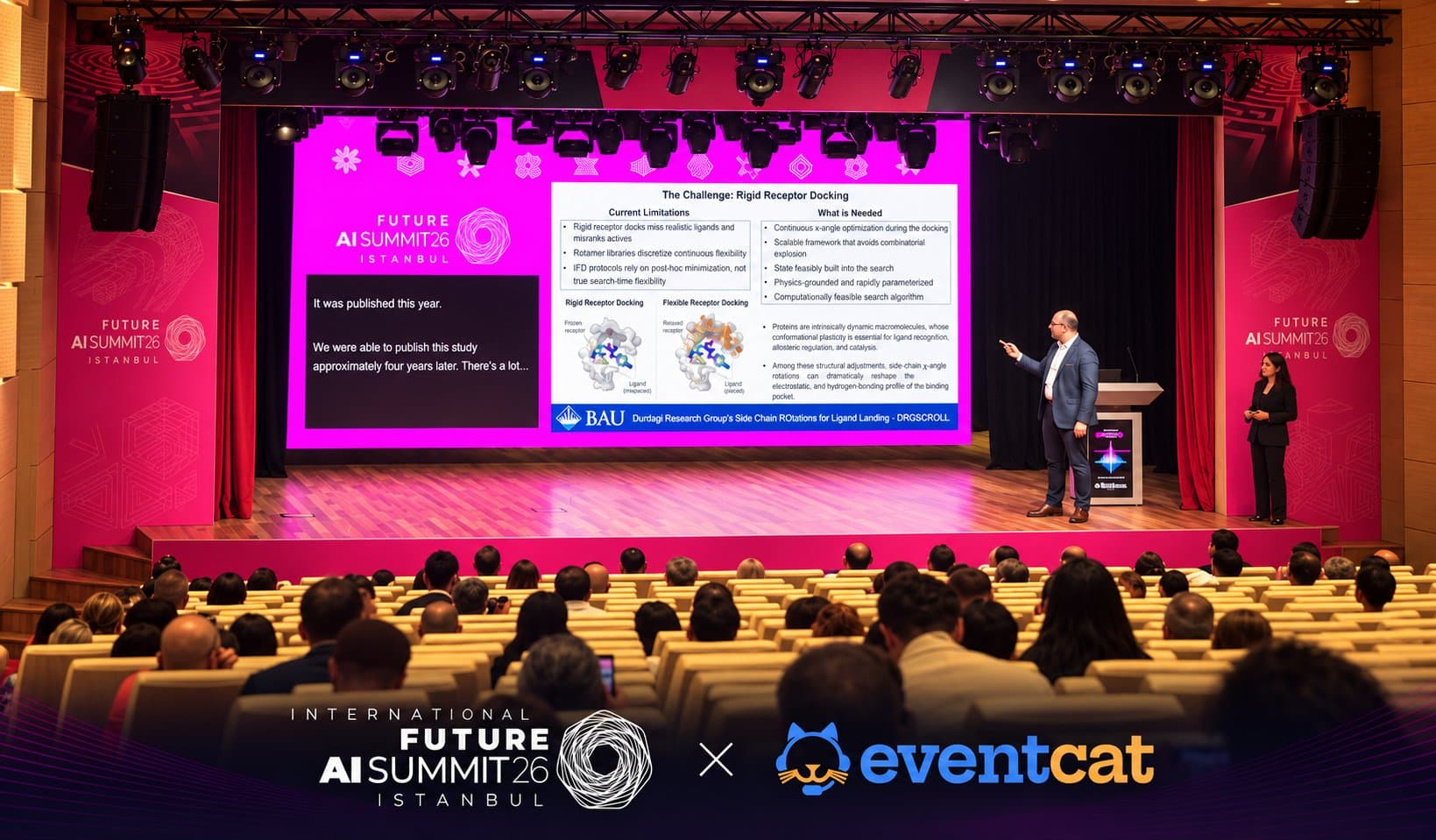
AI Translation for International Conferences: EventCAT at Future AI Summit 2026 in Türkiye
Gianella Furino
Why Real-Time Japanese Interpretation Matters for Global Events
Gianella Furino
EventCAT on the Road: Real-Time AI Translation Across Japan and Korea This October
Gianella Furino