
Can AI Interpretation Replace Human Interpreters?
AI and Human Interpreters: Complementary, Not Competing
Rather than replacing human interpreters, AI interpretation is increasingly being used alongside them.
In settings such as diplomatic negotiations and VIP events, where cultural understanding and high accuracy are essential, human interpreters remain indispensable.
In contrast, AI interpretation has become a practical solution for international conferences, corporate meetings, and global events where speed and cost efficiency are key.
As AI adoption grows, human interpreters and AI are increasingly being used together, each contributing their own strengths in different communication environments.
Why AI Interpretation Is Expanding in Global Business
1. Lower Costs and Greater Operational Efficiency
Traditional simultaneous interpretation requires professional interpreters, interpretation equipment, and on-site staff, resulting in higher operating costs.
In contrast, SaaS-based AI interpretation solutions provide a more cost-effective way to support multilingual communication, regardless of the event size or number of languages.
Instead of using dedicated interpretation equipment, participants can access real-time translated captions on their smartphones by scanning a QR code or opening a web page.
2. Faster Real-Time Communication
For international conferences, panel discussions, and business meetings, delivering information without delay is essential.
AI interpretation automatically recognizes spoken language and generates translated captions in real time, allowing participants to follow presentations and discussions almost instantly. This helps maintain the natural flow of conversations and improves overall engagement.
AI Interpretation vs. Human Interpretation
Category | AI Interpretation | Human Interpretation |
Cost | Lower (subscription or license-based) | Higher (professional interpreters and equipment required) |
Language Support | Multiple languages simultaneously | Separate interpreter required for each language |
Cultural Understanding | Limited | Excellent |
Best Use Cases | International conferences, seminars, corporate meetings, large-scale events | Diplomacy, executive meetings, negotiations, highly specialized discussions |
How AI and Human Interpreters Can Work Together?
AI interpretation is not designed to replace professional interpreters. Instead, it expands language accessibility and enables more people to participate in multilingual communication.
Expanding Language Accessibility
For situations requiring deep cultural understanding, emotional nuance, and precise interpretation such as diplomatic negotiations or executive meetings, human interpreters remain indispensable.
However, when supporting five or more languages simultaneously at international events, AI interpretation can provide a far more scalable and cost-effective solution.
Organizations that previously lacked the budget or resources to offer multilingual services at conferences, seminars, internal meetings, or corporate events can now provide real-time language access through AI.
Explore real-world examples of AI interpretation at international events.
Improving Information Accessibility
AI interpretation is not only about translating languages it also helps make information accessible to everyone.
One example is real-time speech-to-text (STT) captioning. Live captions enable participants who are deaf or hard of hearing, as well as attendees in noisy event environments, to follow presentations more easily.
By improving both language and information accessibility, AI interpretation creates a more inclusive communication experience.
Breaking Language Barriers with EventCAT
EventCAT is a real-time AI interpretation and live captioning platform designed to improve language accessibility at global events.
Participants simply scan a QR code or open a web page to access translated captions on their smartphones without installing an app or using dedicated interpretation devices.
At NextRise 2026, where attendees from numerous countries gathered, EventCAT provided real-time AI translation, allowing participants to understand presentations and engage in discussions without language barriers.
The Goal Is Expansion, Not Replacement
The purpose of AI interpretation is not to replace human interpreters, but to help more people communicate without language and information barriers.
Human interpreters remain essential in situations requiring cultural sensitivity, contextual understanding, and exceptional accuracy, such as diplomacy or executive-level meetings.
Ultimately, AI interpretation and human interpreters are not competitors. They are complementary solutions, each suited to different communication needs.
Discover how EventCAT is helping organizations create more accessible multilingual experiences through real-world customer success stories.
Related Post
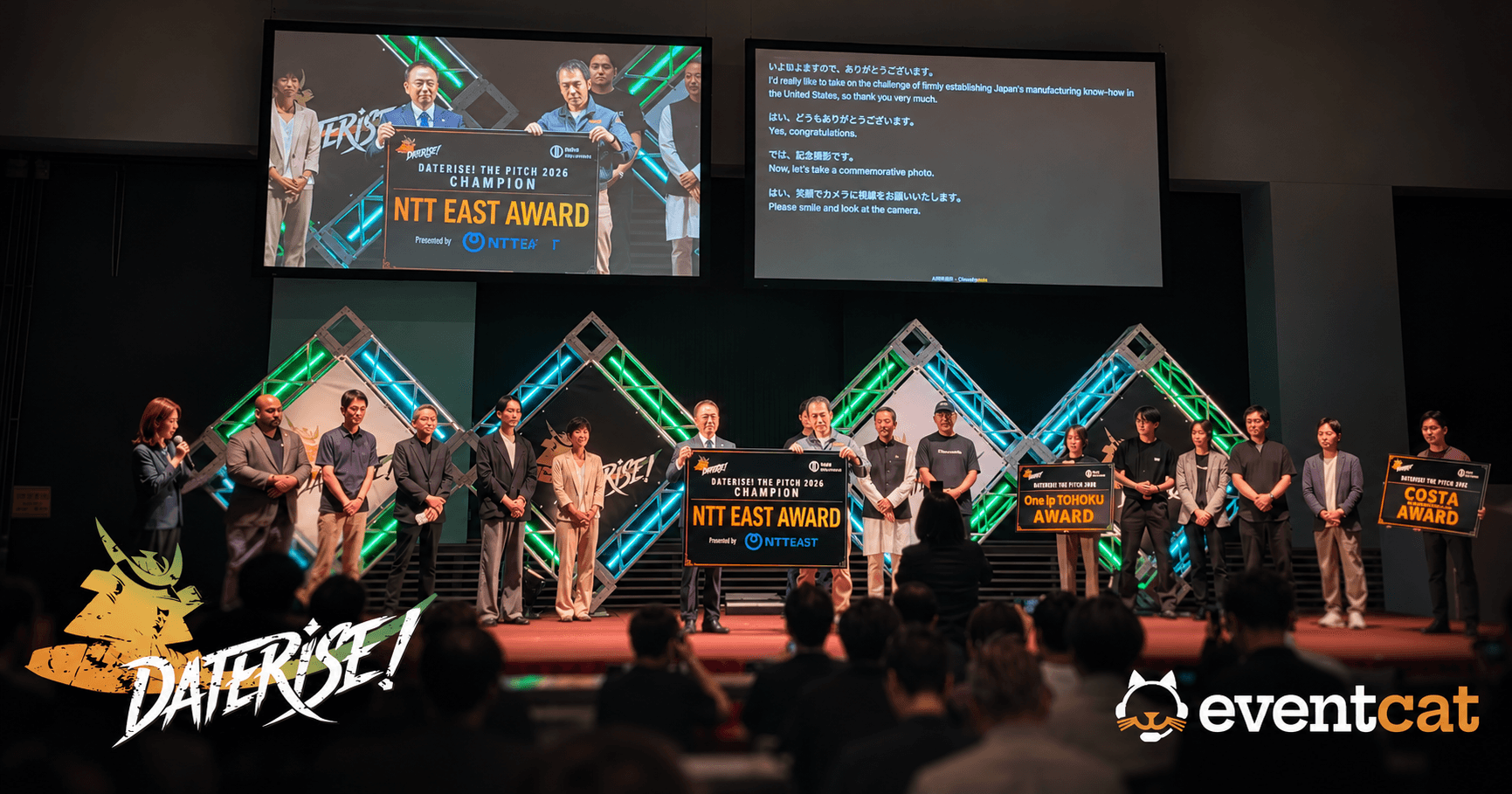
From Tohoku to the World: Real-Time AI Interpretation Demonstrated at DATERISE! 2026
Declan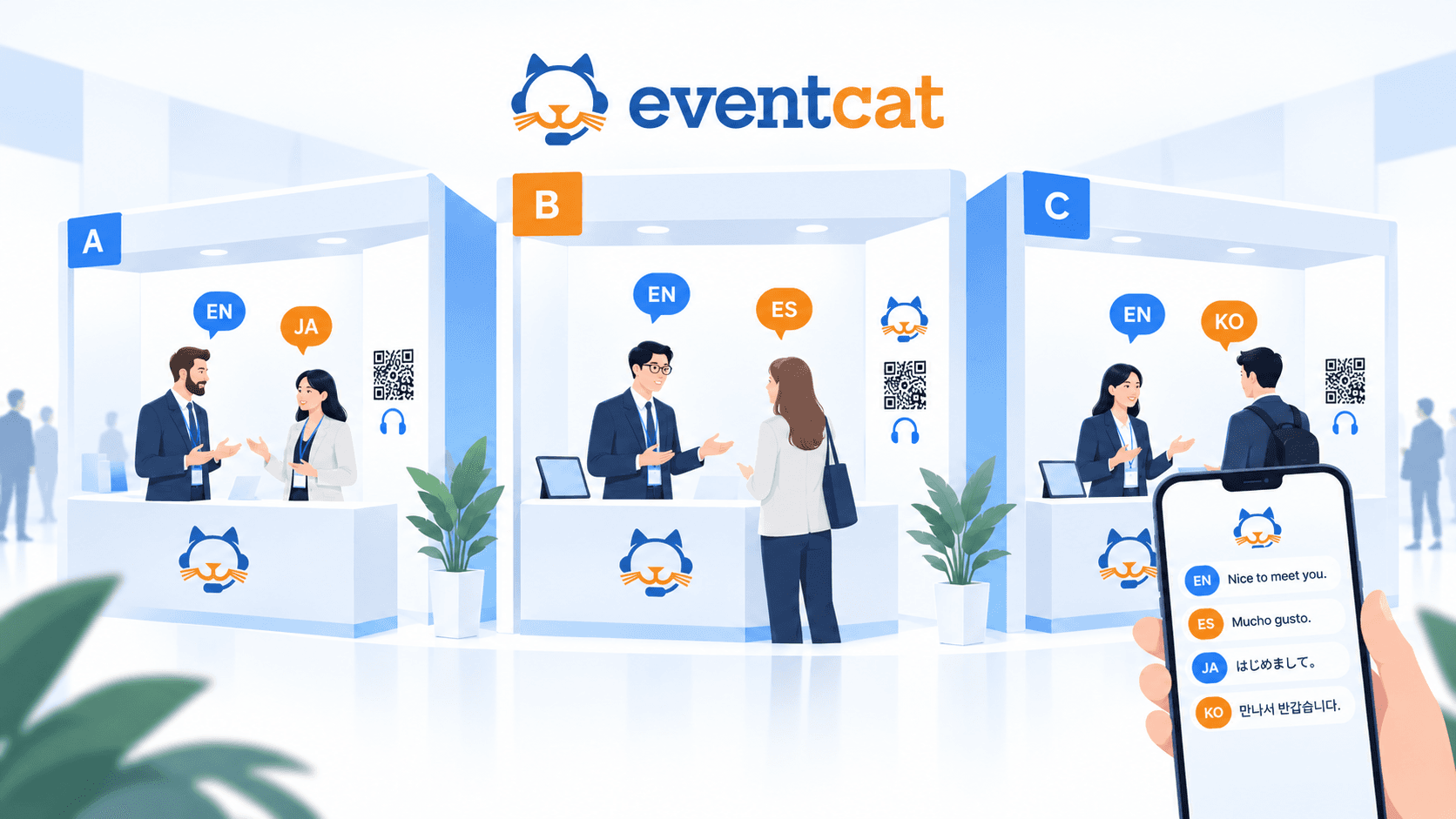
Why Every Booth at an International Trade Show Needs Its Own Translation Setup
Gianella Furino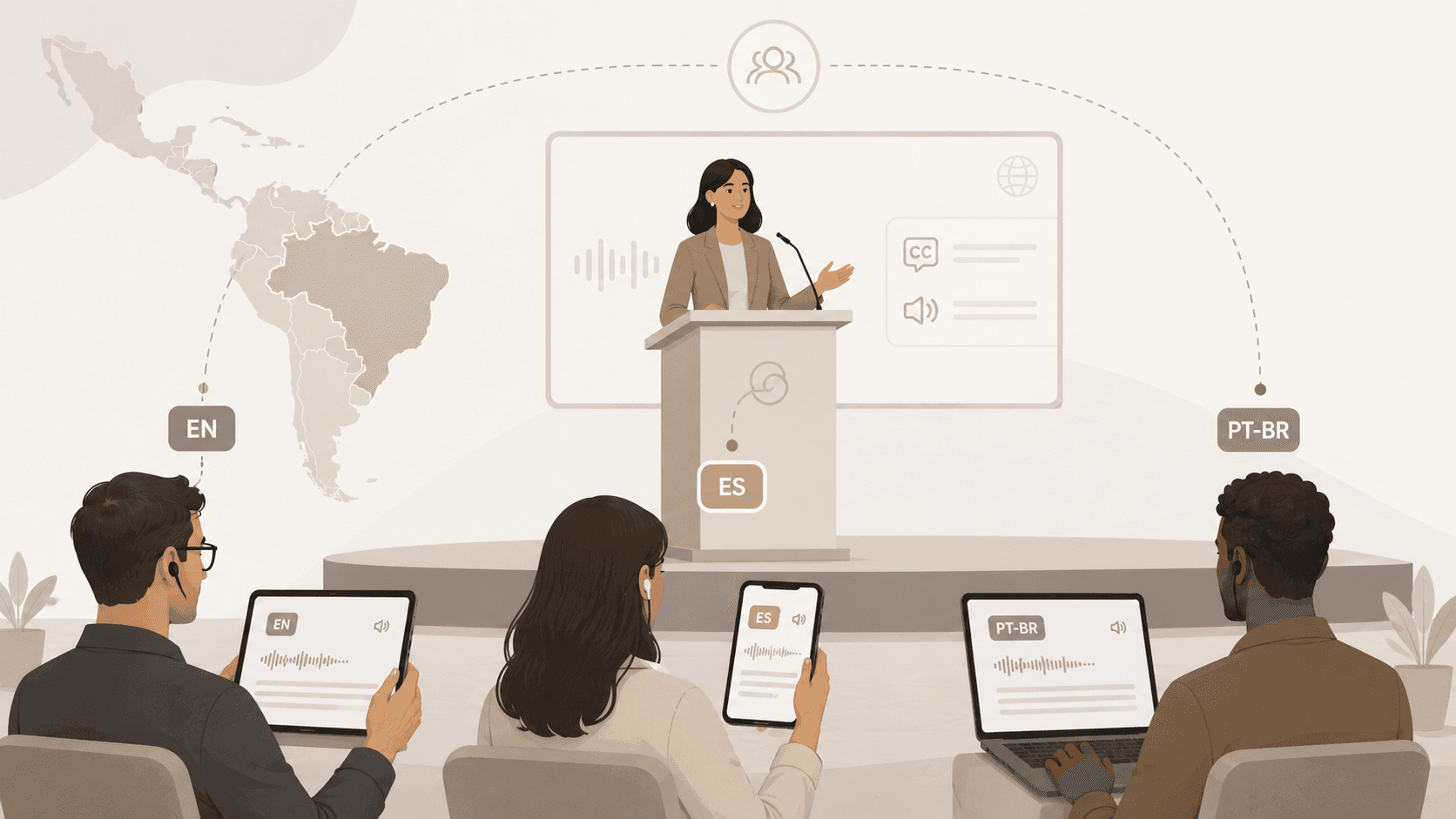
Spanish Isn’t the Only Language in LATAM: How to Plan Events for Spanish- and Portuguese-Speaking Audiences
Gianella Furino