
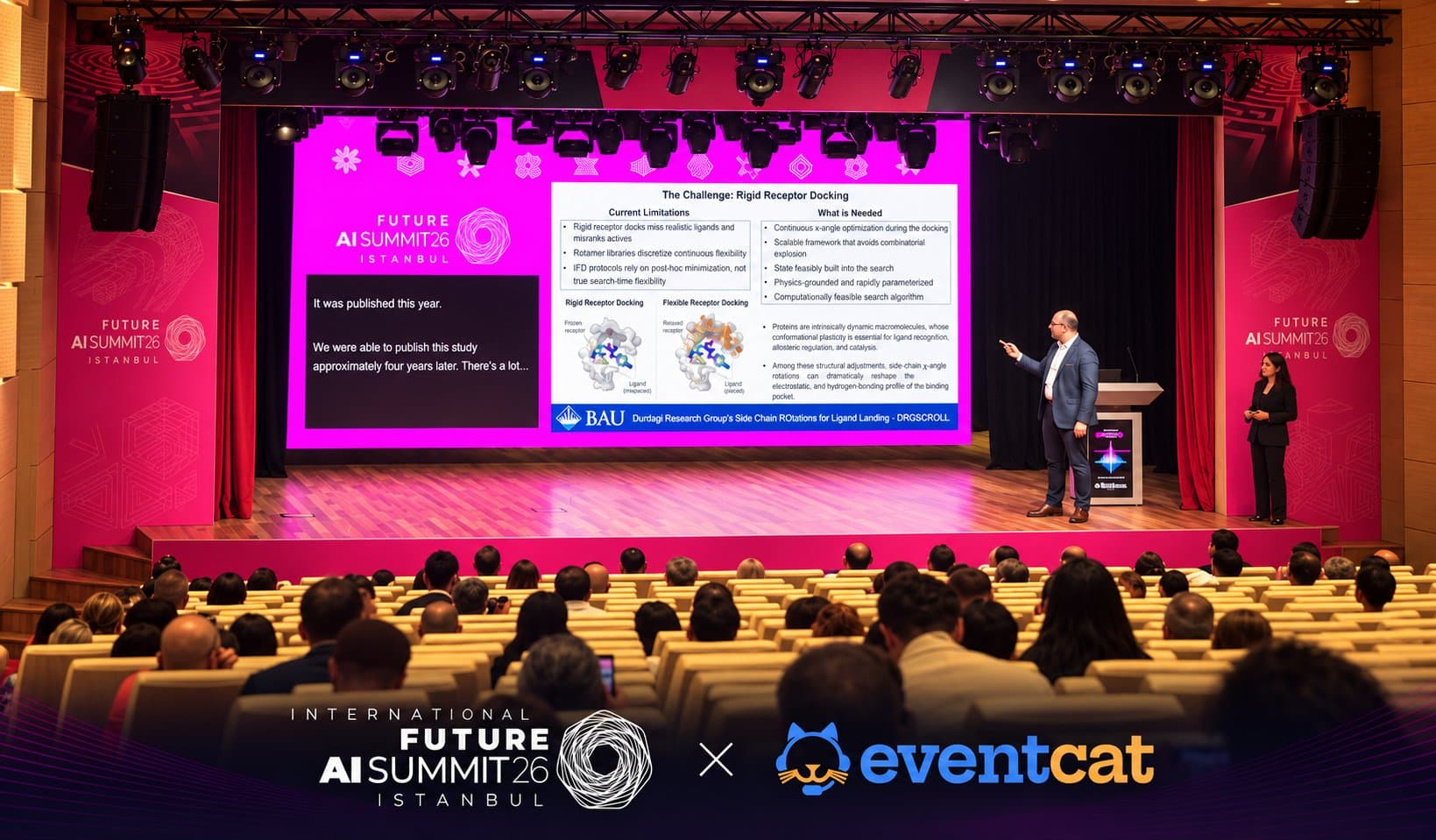
AI Translation for International Conferences: EventCAT at Future AI Summit 2026 in Türkiye
Türkiye is becoming one of the most important meeting points for international conferences connecting Europe, the Middle East, Central Asia, and Asia. As more global events bring together speakers and attendees from different language backgrounds, real-time multilingual communication is becoming an essential part of the event experience.
This growing demand was evident at Future AI Summit 2026, where EventCAT returned for the second consecutive year to provide real-time AI translation and multilingual captions in Istanbul.
Under the theme "Redesign Intelligence," Future AI Summit brought together researchers, entrepreneurs, AI practitioners, investors, educators, and technology leaders from different countries. The diversity of both the audience and the program meant that multilingual communication became just as important as the technology being discussed.
EventCAT operated across two halls, delivering real-time AI translation directly through the event’s large screens. Instead of setting up a separate translation experience, the captions were integrated into the visual environment attendees were already using throughout the sessions.
Future AI Summit 26 at a Glance
Location: Istanbul, Turkey
Date: June 22–23, 2026
Venue: Bahçeşehir University, Beşiktaş Campus
EventCAT setup: Two halls
Translation output: Real-time multilingual captions on the main event screens
Milestone: Second consecutive Future AI Summit supported by EventCAT
A New City and a Two-Hall Setup
Running real-time translation across multiple stages is one of the biggest operational challenges for international conferences.
Sessions took place across multiple spaces, and the topics moved quickly between technical and academic fields. EventCAT ran in two halls throughout the summit, allowing speakers to continue presenting normally while their speech was processed and translated in real time. There was no need to build pauses into the program or change the way sessions were delivered.
That flexibility is particularly useful for international conferences with varied content. A session on software or data may be followed by a discussion on neuroscience, mathematics, philosophy, or ethics. Real-time event translation has to keep up with those changes while remaining unobtrusive for both speakers and attendees.
For the production team, the goal was straightforward: translation needed to fit the event that was already taking place, rather than asking the event to adapt around the translation technology.
Putting Real-Time Translation Where People Were Already Looking
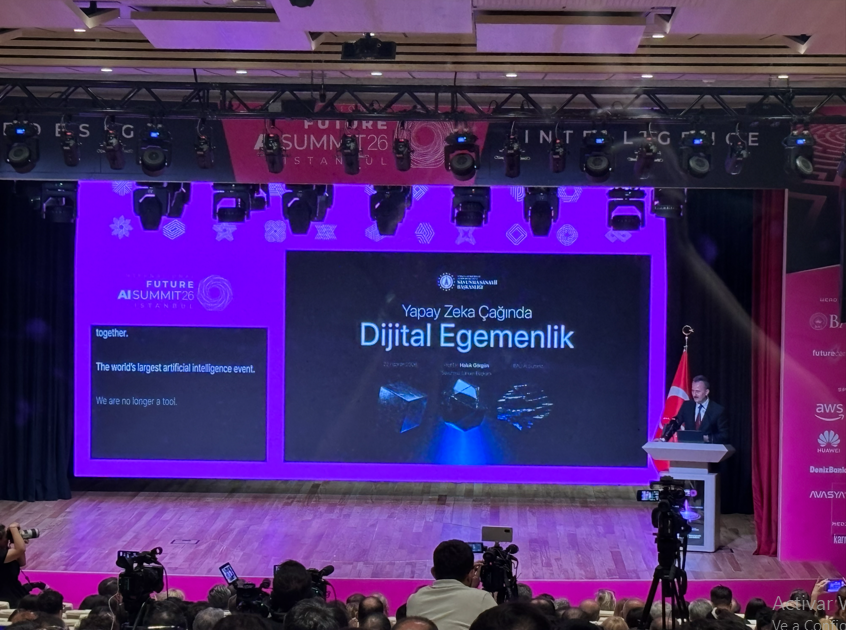
One of the biggest decisions for organizers is where attendees should access multilingual content.
EventCAT can provide translated captions directly to attendees through QR access on their phones, but for Future AI Summit 26 the onsite team took a different route. The translated content was formatted into a square area and incorporated directly into the large-screen layout. Attendees could follow the speaker and the translation in the same place, without opening another page or using a second device.
Instead of asking attendees to change how they experienced the event, multilingual communication became a natural part of the event itself.
People were curious about it too. Several attendees approached the onsite team during the summit to ask what the tool was called and how the translation was being generated. They were already using the captions, but seeing them integrated into the event made them curious about the technology behind them.
The sessions gave EventCAT some demanding material to work with. A presentation by Türker Kılıç, for example, moved between neuroscience, informatics, mathematics, philosophy, and ideas around relationality and wholeness.
That kind of content is a good reminder that live translation at an international summit is rarely just everyday conversation.
For international conferences in Türkiye, multilingual communication often involves both Turkish-speaking participants and global attendees. Supporting real-time translation between Turkish and English helped participants follow technical discussions more naturally throughout the summit.
Why Preparing the Language Before the Event Matters
Accurate AI translation for technical conferences depends on more than speech recognition. Industry terminology, company names, and specialist vocabulary all influence translation quality.
EventCAT’s Glossary can use that preparation to help important terms appear more consistently during live translation. At a conference where the subject can change dramatically from one session to another, giving the system some context beforehand can make a noticeable difference.
Berkay Tartıcı, who operated EventCAT onsite during Future AI Summit 26, described that preparation as one of the strongest parts of the workflow:
“Preparing the glossary before the event made a significant difference. Even sessions covering neuroscience, mathematics, and AI terminology were translated much more naturally. It is one of the simplest ways to improve translation quality.”
It does not require an entirely new preparation process. In most cases, the terminology already exists somewhere in the materials being prepared for the event. The important part is making use of it before the microphones go live.
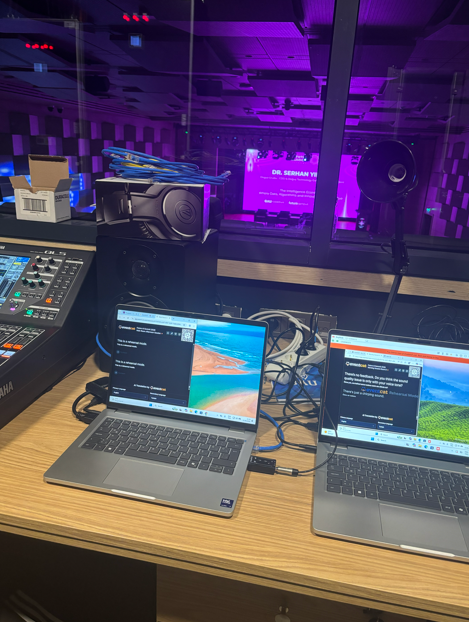
Why EventCAT Works for International Conferences
A conference production team already has plenty to manage. Speakers arrive late, slides change, microphones move between people, sessions run over time, and screens have their own production requirements.
Real-time translation has to work inside that environment.
At Future AI Summit 26, EventCAT ran across two halls while translated captions were delivered through screens that were already part of the event setup. The audience did not need additional instructions to start following the translation.
For other conferences, the same system can be configured differently depending on how people need to access the content:
Real-time AI translation while speakers continue presenting normally
Large-screen multilingual captions integrated into the stage layout
QR-based access when attendees need to select languages individually
Glossaries prepared for names, companies, acronyms, and specialist terminology
Multi-room operation for conferences running simultaneous sessions
There is also the practical side of event production. Traditional interpretation can involve interpreters, booths, receivers, transmitters, and additional onsite coordination. EventCAT offers another way to provide multilingual access when organizers need a setup that can move more easily across rooms and audiences.
Supporting Future AI Summit in both London and Istanbul also demonstrates how EventCAT is becoming a trusted multilingual communication partner for international conferences across Europe and beyond.And when the translation fits naturally into the event, that is exactly what it does.
Whether the audience speaks Turkish, English, or another language, the goal remains the same: helping every participant engage with ideas rather than language barriers.
Bring Real-Time AI Translation to Your Next International Conference
As international conferences continue to expand across Europe and neighboring regions, organizers are discovering that multilingual communication is no longer just an accessibility feature-it has become part of the event infrastructure. Whether participants are joining from Türkiye, Europe, the Middle East, or Asia, real-time AI translation helps more people engage with ideas, discussions, and opportunities without language becoming a barrier.
Whether you're organizing an AI summit, academic conference, university symposium, startup event, investor forum, or corporate conference, EventCAT helps participants communicate naturally across languages through multilingual captions and AI interpretation.
Learn how EventCAT supports multilingual conferences across Europe, Asia, and beyond.
Visit www.EventCAT.com to learn how EventCAT can support your next international event.
Related Post
Why Real-Time Japanese Interpretation Matters for Global Events
Gianella Furino
EventCAT on the Road: Real-Time AI Translation Across Japan and Korea This October
Gianella Furino
AI Real-Time Simultaneous Translation Subtitles Applied to an International Wedding — A Case of a Korean-Japanese Couple’s Wedding
Declan