
U-KNOCK 2026 Featuring Squid Game Actress Kim Joo-ryoung: Connecting Korean and Japanese Content Businesses Through AI Interpretation
From webtoons and content IP to co-production and business matchmaking, how did real-time AI interpretation support collaboration between the Korean and Japanese content industries?
Webtoons, television dramas, films, K-POP, and content IP. As global interest in Korean content continues to grow, one of the most important capabilities for succeeding in international markets is communication that goes beyond language and connects businesses.
At content business events bringing together Korean and Japanese companies, participants engage in complex discussions involving investment, licensing, co-production, and platform partnerships. Accurately understanding presentations is essential, but ensuring that even subtle nuances are communicated can also play a critical role in turning conversations into actual collaboration.
For this reason, real-time AI interpretation and live multilingual captions are increasingly becoming a new form of essential infrastructure at global content conferences.
U-KNOCK 2026 in Japan Summit: Connecting Korean Content with the Japanese Market
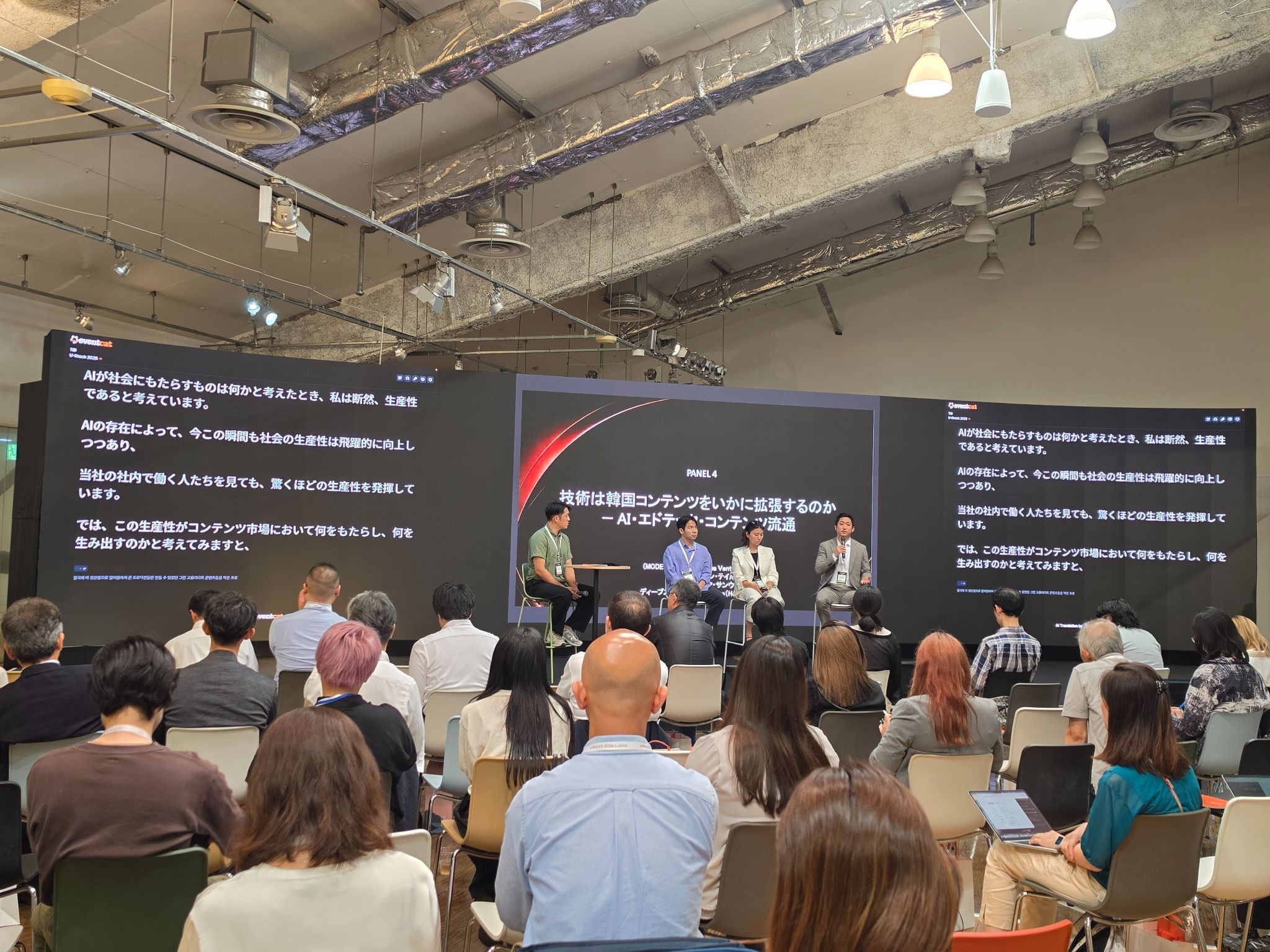
The U-KNOCK 2026 in Japan Summit was held in Tokyo from July 7 to 9.
Hosted by Korea’s Ministry of Culture, Sports and Tourism, organized by the Korea Creative Content Agency (KOCCA), and operated by BESUCCESS Media Group, the program was a global business summit designed to support Korean content companies seeking to enter the Japanese market.
Fifteen Korean companies from a wide range of sectors including webtoons and web novels, television dramas and films, animation, content distribution, K-POP, fandom businesses, and edu tech met with Japanese investors, media companies, and platform operators to explore investment opportunities and potential business partnerships.
The first day was held at Tokyo Innovation Base (TIB), followed by two days at the Mandarin Oriental, Tokyo, featuring public sessions and one-on-one business matching meetings.
As the event brought Korean content companies together with Japanese investors, media companies, and platform businesses to present and negotiate in different languages, a real-time multilingual communication environment was a critical part of the event infrastructure.
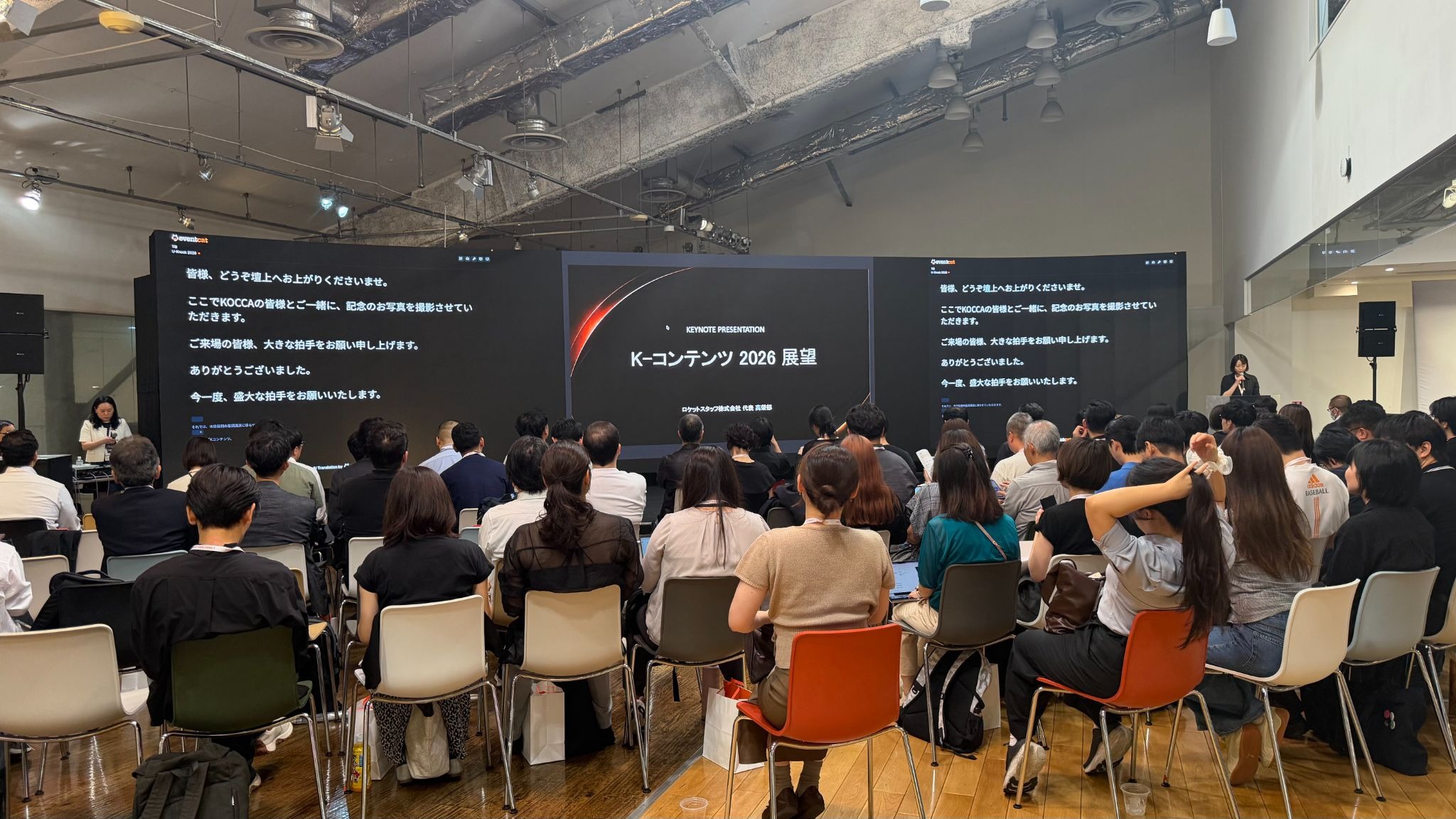
On the first day at TIB, EventCAT provided real-time AI interpretation and multilingual captions for the keynote presentation and four insight panel sessions. This enabled Korean companies and Japanese partners to deliver presentations and participate in discussions in their respective languages while maintaining smooth and natural communication throughout the sessions.
A Keynote Conversation with Squid Game Actress Kim Joo-ryoung: AI Captions Tailored to Separate Screens for Speakers and the Audience
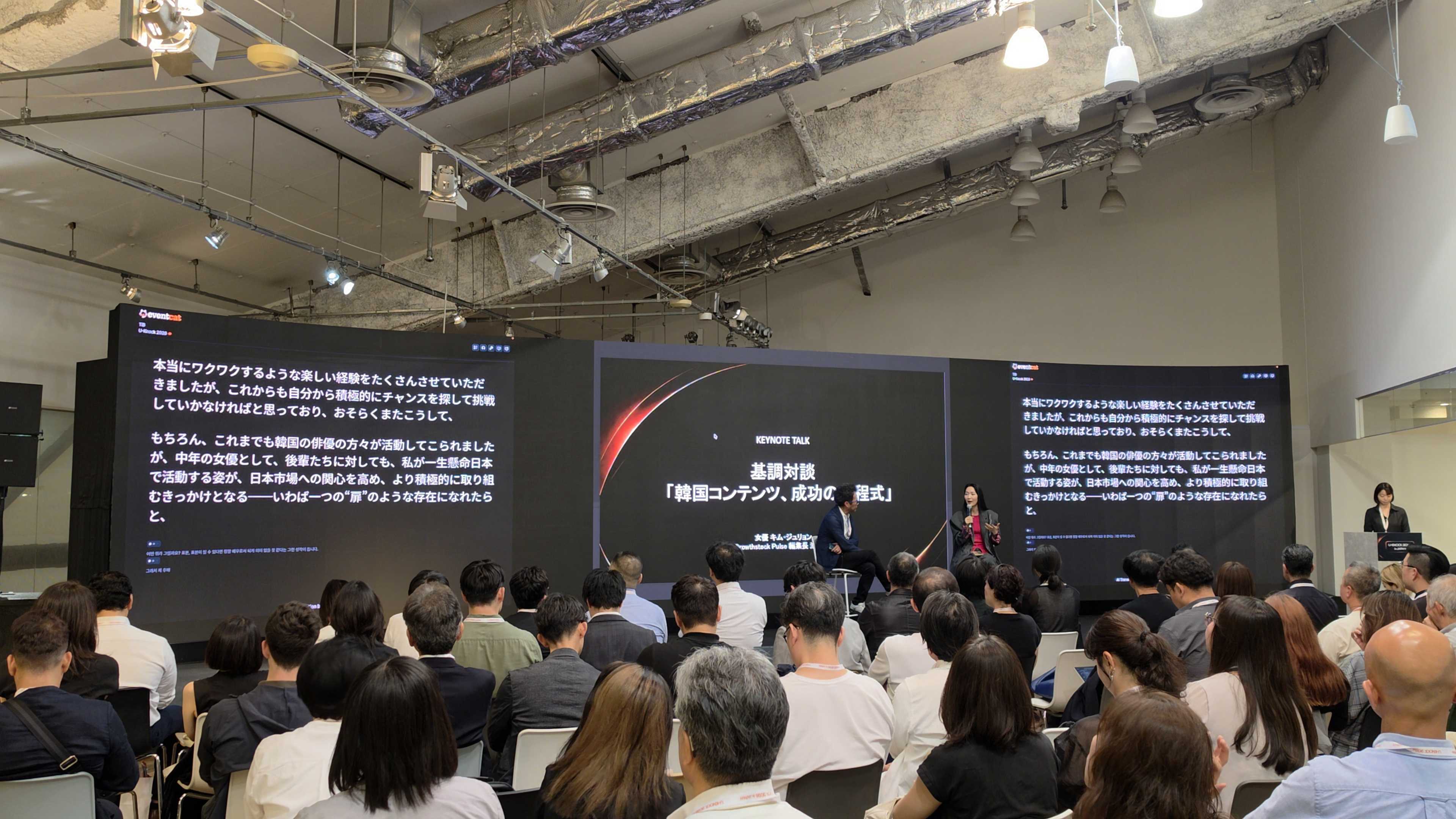
On the first day of the event at TIB, a series of public sessions explored the global competitiveness of the Korean content industry and examples of collaboration between Korea and Japan.
One of the most highly anticipated sessions was a fireside chat featuring Kim Joo-ryoung, an actress from Netflix’s Squid Game.
Held under the theme “The Formula Behind the Success of Korean Content,” the session brought together participants from various countries, including investors, content producers, platform companies, and media professionals.
EventCAT provided real-time AI captions for the Korean-speaking actress and the Japanese-speaking moderator. A key feature of the setup was that the on-stage speakers and the audience viewed different screen layouts. The speakers followed translated captions of each other’s remarks on dedicated monitors, allowing them to continue the conversation naturally, while audience members followed the discussion in real time through captions displayed on the venue’s large screen.
Although the two speakers used different languages, they were able to understand each other’s remarks smoothly, enabling the discussion to proceed naturally without language barriers.
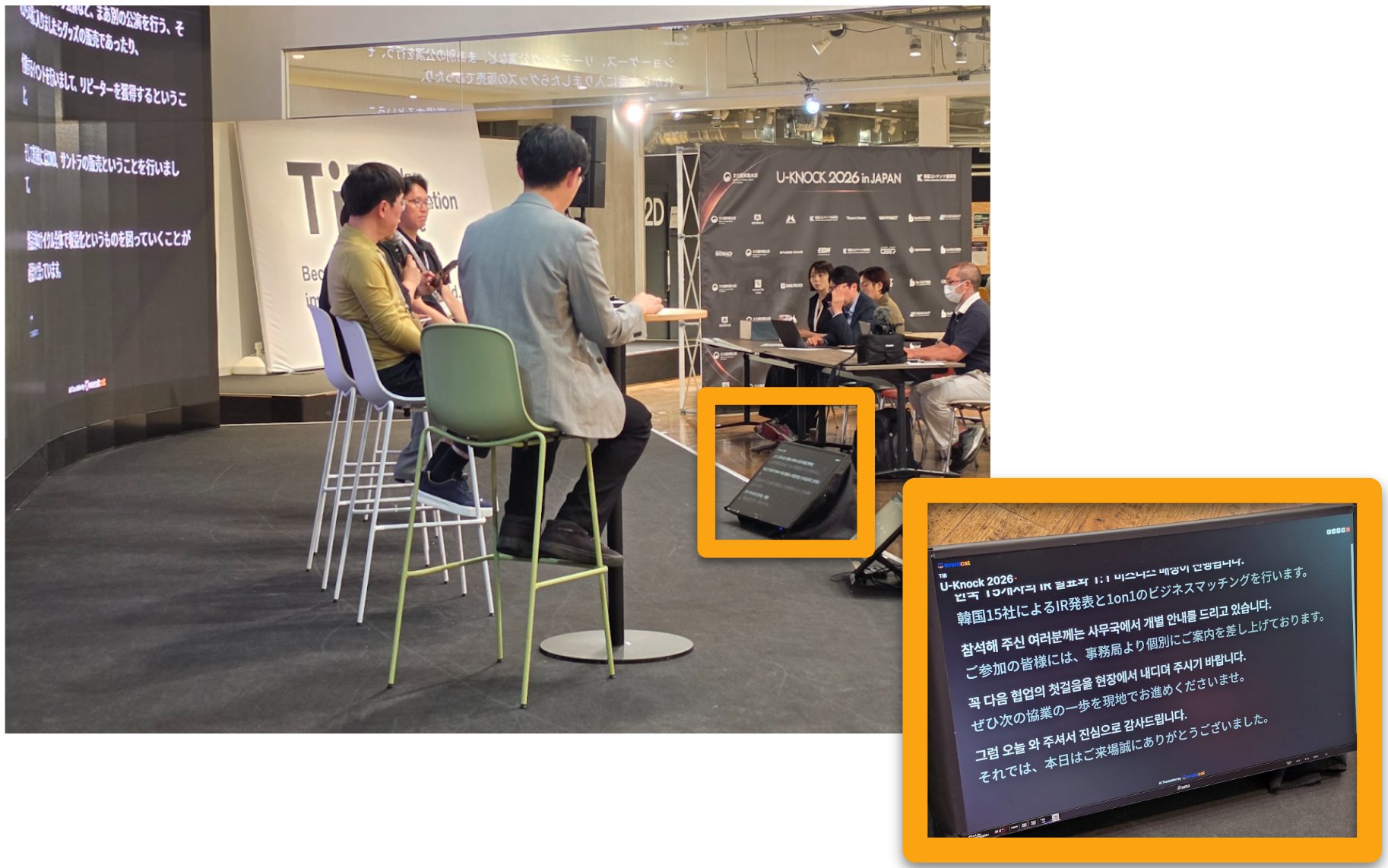
Without separate interpreter booths or consecutive interpretation, both the speakers and the audience could follow the conversation through screens tailored to their respective needs. Even during fast-paced exchanges, participants were able to understand the key insights into the Korean content industry without losing the flow of the discussion.
As this was a public session attended not only by content industry professionals but also by general participants, it was also a meaningful example of how multilingual accessibility can help a broader audience engage with industry discussions without language barriers.
Four Korea–Japan Panel Discussions Conducted Without Interpreter Booths
In addition to the keynote conversation, four panel discussions featuring speakers from Korea and Japan were held at TIB on the first day. Although the panelists moved between Korean and Japanese throughout the discussions, the sessions were conducted using EventCAT’s real-time AI interpretation without separate interpreter booths or simultaneous interpreters.
The same dual-screen setup used for the keynote conversation was also applied to these sessions. Speakers on stage followed real-time translated captions of one another’s remarks on dedicated confidence monitors, enabling them to continue the discussions naturally. Meanwhile, audience members followed the bilingual conversations through captions displayed on the venue’s large screen.
The multilingual discussions were able to proceed smoothly without the space required for interpreter booths or the need to arrange simultaneous interpreters because the screen experience was configured separately for the speakers and the audience, according to their respective needs.
Accurately Conveying Industry-Specific Terminology, from Content IP to Licensing
The content industry frequently uses specialized terminology that general-purpose translation tools may struggle to convey accurately.
Examples include:
Content IP
Licensing
Co-production
OTT platforms
Webtoons
Fan communities
Original series
Without an understanding of the industry context, the intended meaning of these terms can easily be distorted or lost in translation.
For the U-KNOCK 2026 in Japan Summit, EventCAT incorporated presentation materials, company names, content IP titles, platform names, and industry-specific terminology in advance to improve the accuracy of its AI-powered translations.
This preparation enabled terminology unique to the content industry to be communicated naturally during real-time Korean-to-Japanese interpretation. It also helped participants gain a clearer understanding of the presentations and panel discussions, providing a stronger foundation for the business meetings that followed.
AI Interpretation Is Becoming New Infrastructure for Connecting the Content Business
The Korean content industry is rapidly moving beyond the simple export of content and expanding into co-production, IP-based businesses, and partnerships with global platforms.
As these forms of collaboration increase, the most important task is no longer simply translating languages, but connecting businesses.
The U-KNOCK 2026 in Japan Summit demonstrated that real-time AI interpretation can serve not merely as a convenient feature, but as a new form of global communication infrastructure connecting investors with content companies, platforms with production studios, and Korea with Japan.
EventCAT will continue to support communication across the content and media industries, as well as startup, investment, academic, MICE, and global conference environments. Through real-time AI interpretation and multilingual captions, EventCAT aims to help more people connect without language barriers.
Drawing on its operational experience at global events including SusHi Tech Tokyo 2026, IVS Kyoto 2026, and Connect Marketplace Hong Kong, EventCAT provides AI interpretation environments optimized for international events and global business settings.
More global use cases are available on the EventCAT Blog. Detailed guidance on solutions tailored to different event sizes and operational environments is also available through consultations and demonstrations.
EventCAT implementation and demo inquiries: contact@eventcat.com
Related Post
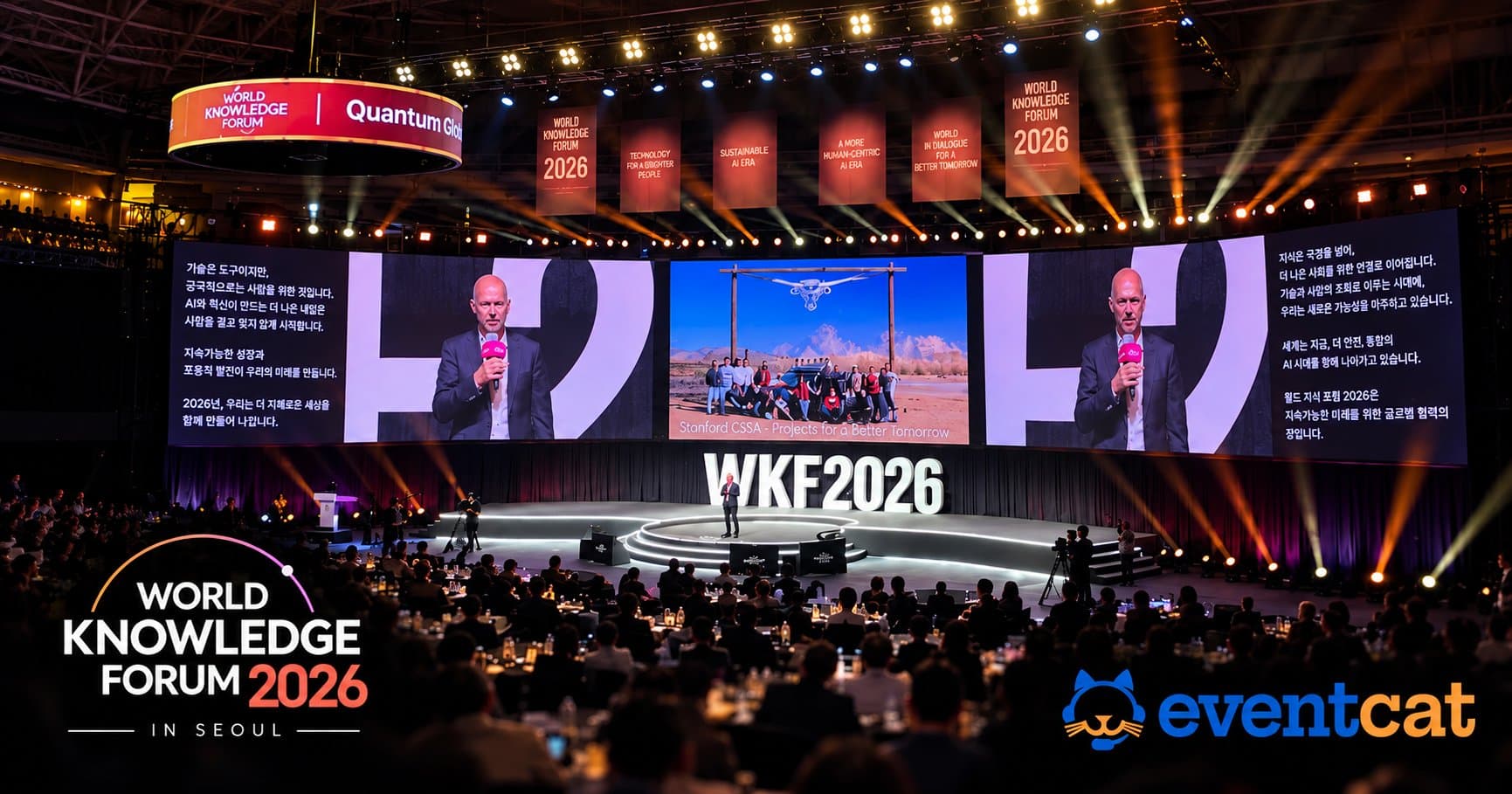
From Sebastian Thrun to David Cameron, Access Global Insights From the World Knowledge Forum Without Language Barriers
Declan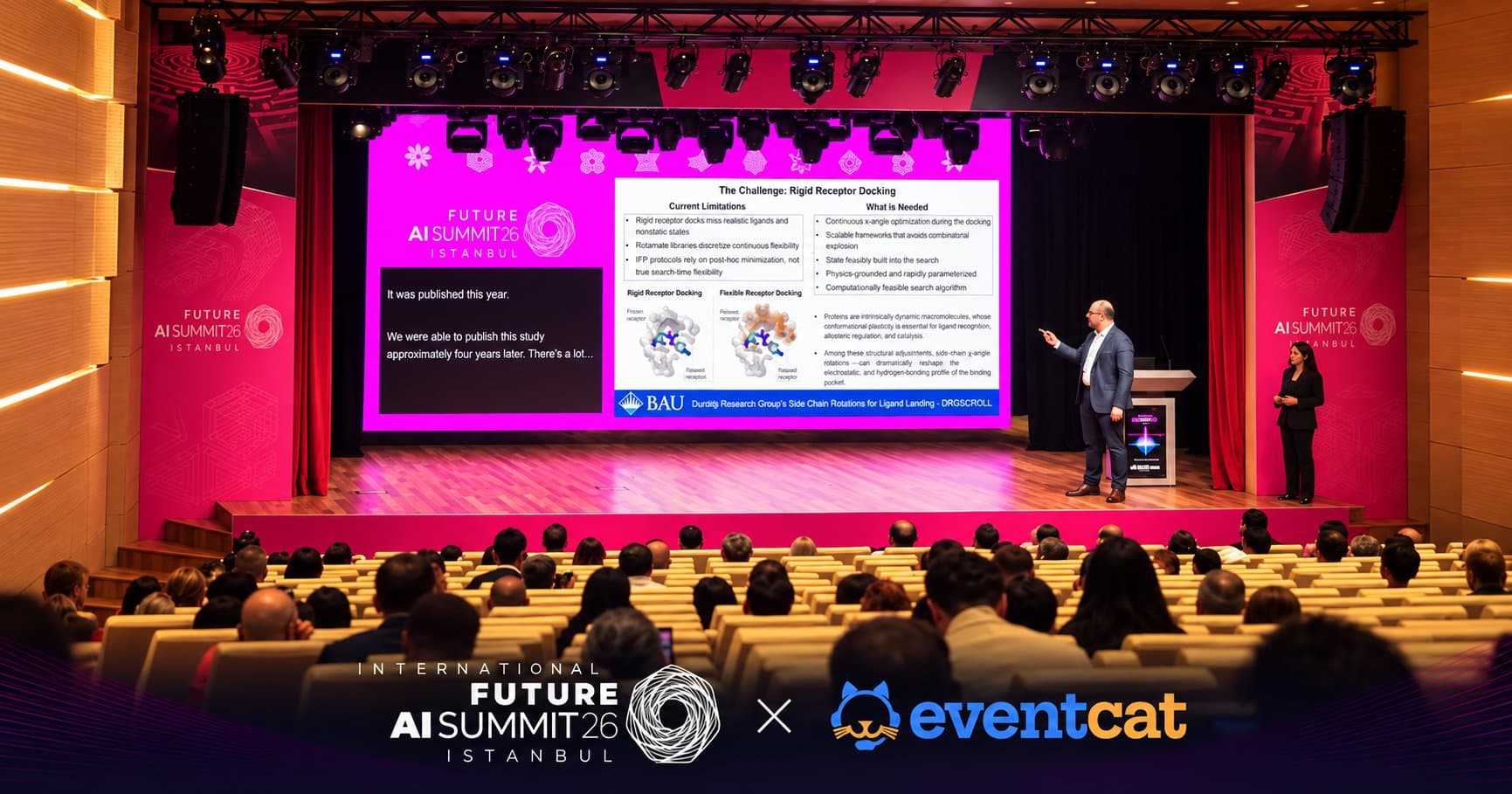
AI Translation for International Conferences: EventCAT at Future AI Summit 2026 in Türkiye
Gianella Furino
Why Real-Time Japanese Interpretation Matters for Global Events
Gianella Furino