
Why Real-Time Japanese Interpretation Matters for Global Events
Japan is one of the world's largest economies and a global hub for manufacturing, technology, investment, entertainment, and academic collaboration. Yet many international events in Japan still face the same challenge: enabling Japanese and international participants to communicate naturally in real time.
As conferences, startup events, business meetings, and exhibitions become increasingly multilingual, real-time Japanese interpretation is becoming an essential part of event infrastructure. This international dimension is becoming increasingly visible. Japan’s preliminary 2025 census recorded a population of 123.05 million, while the country welcomed a record 42.68 million international visitors during the year. More than 4.12 million foreign residents were also living in Japan by the end of 2025. Interest in learning Japanese continues to grow globally as well. The Japanese-Language Proficiency Test received approximately 1.94 million applications worldwide in 2025, the highest number in its history.
For international events, this creates an environment in which Japanese increasingly needs to work alongside English, Korean, Chinese, and many other languages in real time. Supporting Japanese therefore requires more than translating individual sentences. It requires understanding how the language works and how multilingual communication can be delivered practically at scale.
Understanding Modern Japanese
Japanese uses three writing systems—kanji, hiragana, and katakana—often within the same sentence.
Unlike alphabet-based languages, Japanese combines Chinese characters with phonetic scripts while also incorporating a growing number of English loanwords, technical terms, company names, and acronyms used in modern business. As a result, a single presentation at a technology conference may naturally include Japanese grammar alongside expressions such as AI, SaaS, DX, PoC, KPI, and product names from global companies.
This combination makes Japanese one of the most distinctive languages to support in real-time multilingual communication, particularly at conferences, business meetings, and international events.
What Makes Modern Japanese Challenging for Real-Time Translation?
One of the most important characteristics of Japanese is how strongly meaning can depend on context. Subjects and objects are frequently omitted when they can be inferred from the conversation, so a sentence that sounds completely natural to a Japanese listener may contain less explicit information than an equivalent sentence in English. Japanese sentence structure also differs significantly from English. The verb generally comes near the end of a clause, which means information needed to fully interpret the sentence may arrive relatively late. In real-time translation, this creates a particular challenge. The system needs to produce useful output quickly while avoiding an interpretation that may change once the speaker finishes the sentence.
Another distinctive element is keigo, the Japanese honorific system. Speakers can change vocabulary, verbs, and forms of address according to hierarchy, professional relationships, and the level of formality required. Modern Japanese also makes extensive use of abbreviations, imported English terminology, product names, and Japanese-created English expressions. Startup and technology discussions may move naturally between terms such as AI, SaaS, PoC, DX, KPI, and Japanese terminology within the same conversation.
For real-time AI interpretation, Japanese is therefore not simply a matter of replacing one word with another. The system needs to continuously handle context, sentence structure, register, terminology, and proper names.
Why Japanese Matters More in Global Communication Today
The international relevance of Japanese is no longer limited to traditional Japanese corporations. Japan has become an increasingly active meeting point for startup ecosystems, technology conferences, entertainment and content businesses, international investment, tourism, and cross-border collaboration. Global interest in Japanese reflects this reach. The Japan Foundation’s 2024 survey reported record highs in the number of Japanese-language education institutions, teachers, learners, and countries or regions offering Japanese education overseas.
At the same time, communication inside Japan itself is becoming more multilingual. More than four million foreign residents now live in the country, while tens of millions of international visitors arrive each year. This means multilingual communication increasingly matters in both directions. Japanese companies need to communicate with international audiences, while international entrepreneurs, researchers, investors, creators, and business partners also need to communicate effectively inside Japan.
For events, this changes the role of translation. A global conference in Tokyo or Kyoto may have a Japanese moderator, Korean panelists, English-speaking executives, international investors, and an audience accessing content in several languages at the same time. Translation is therefore becoming less of a separate service and more of a part of the event infrastructure itself.
How EventCAT Supports Japanese in Real-World Events
EventCAT supports real-time AI interpretation and multilingual captions for Japanese as part of a multilingual environment supporting more than 50 languages. Organizers can deliver translated content through main screens, speaker monitors, presentation displays, or QR-based access on personal devices, allowing Japanese and international participants to follow the same conversation without creating a separate interpretation workflow.
EventCAT has already applied this approach at several events in Japan, each with different audiences, formats, and communication needs.
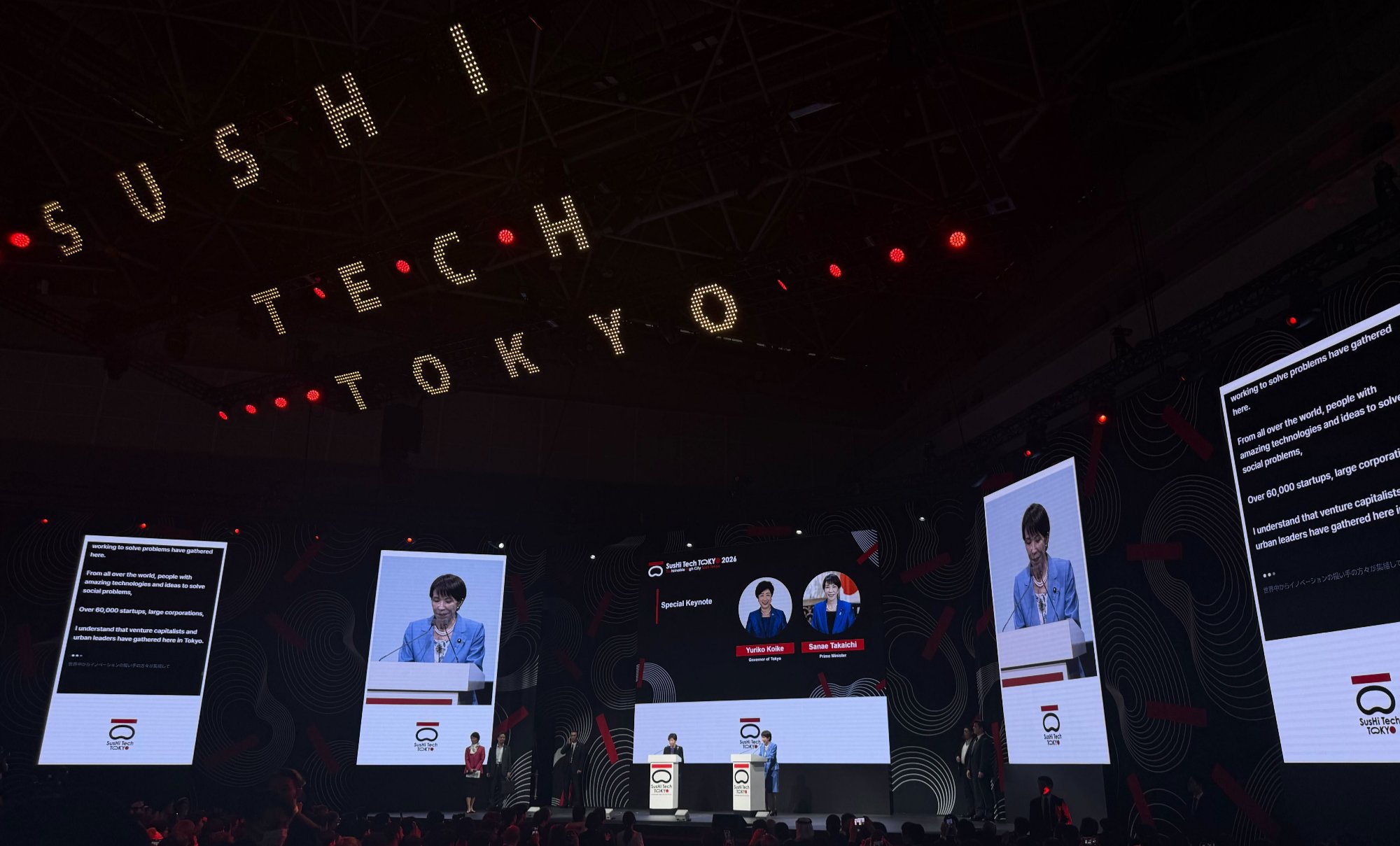
At SusHi Tech Tokyo 2026, held at Tokyo Big Sight, EventCAT provided real-time multilingual interpretation captions across eight stages as part of its collaboration with the Tokyo Metropolitan Government. One of the most significant sessions was the address by Prime Minister Sanae Takaichi, Japan’s first female prime minister, whose Japanese speech was translated into English in real time for international attendees. EventCAT also supported sessions featuring Tokyo Governor Yuriko Koike, while audiences could follow translated captions on large venue screens, stage-side displays, or their own smartphones through QR access.
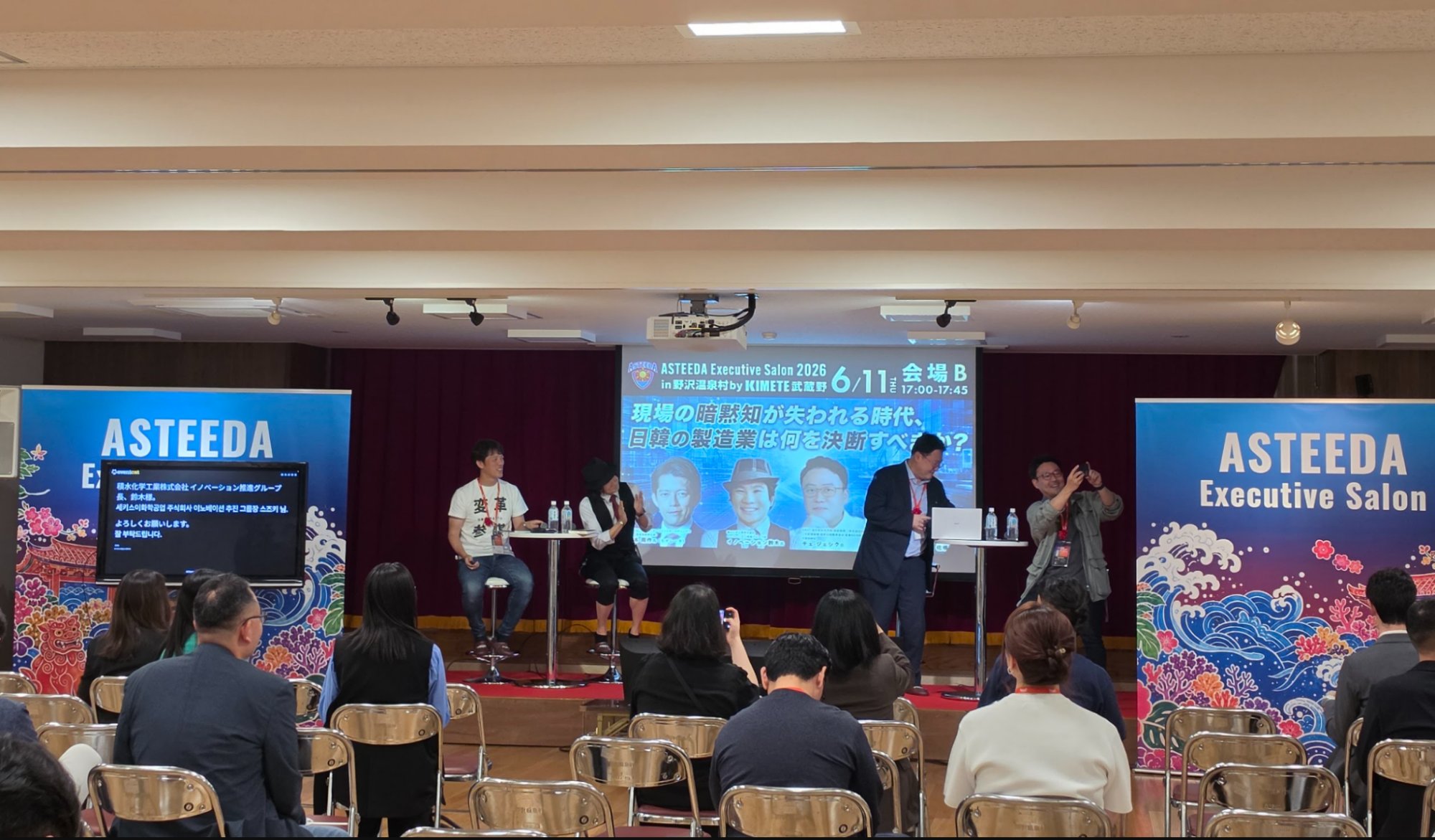
SusHi Tech,
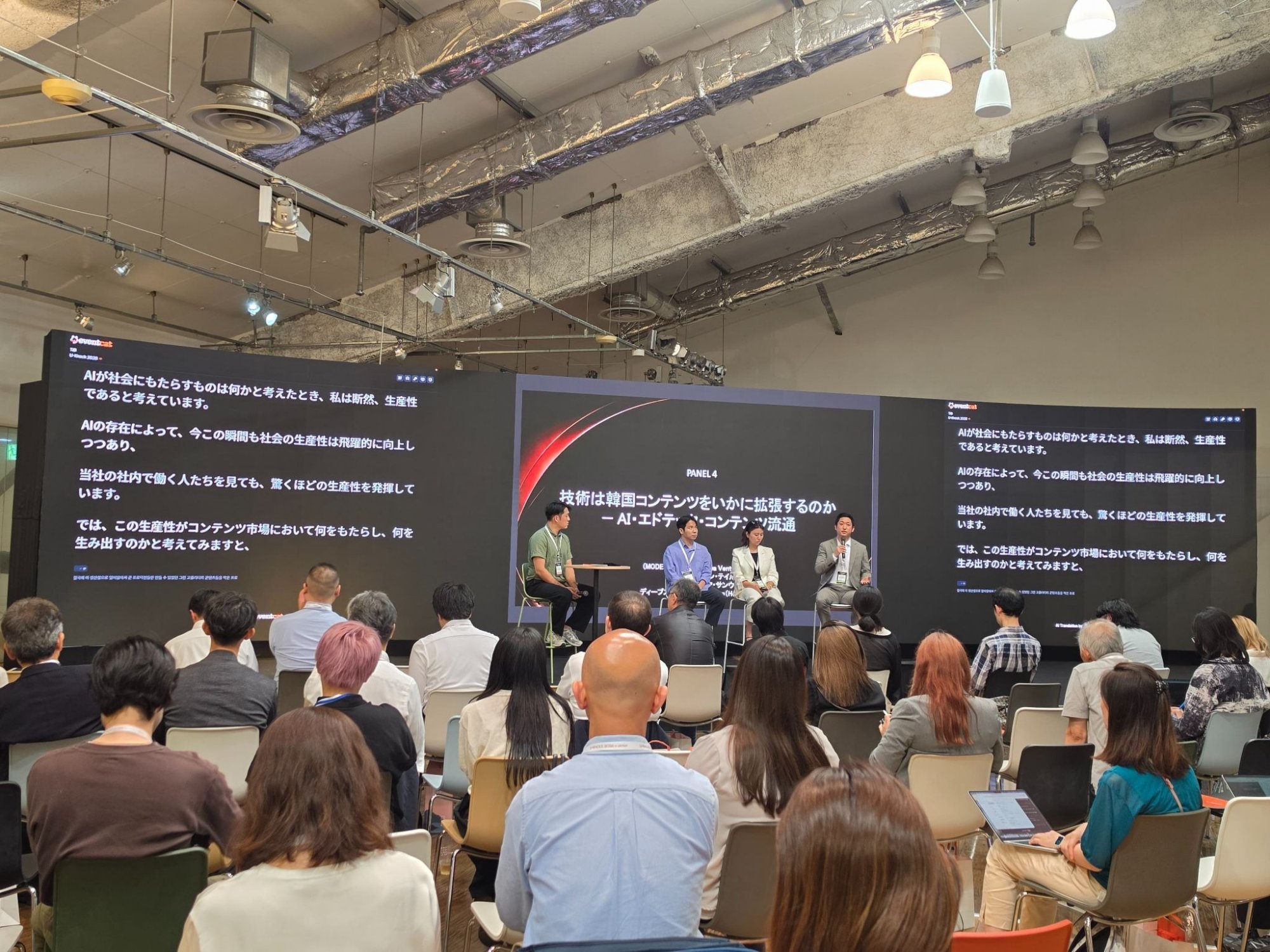
At U-KNOCK 2026 in Japan Summit, EventCAT supported Korean–Japanese communication between 15 Korean content companies and Japanese investors, media companies, and platform businesses. Real-time interpretation was provided during the keynote and four panel discussions, with speakers viewing translated content on dedicated monitors and the audience following multilingual captions on the main screen. This setup allowed Korean and Japanese participants to communicate more naturally without repeatedly pausing the conversation for consecutive interpretation.
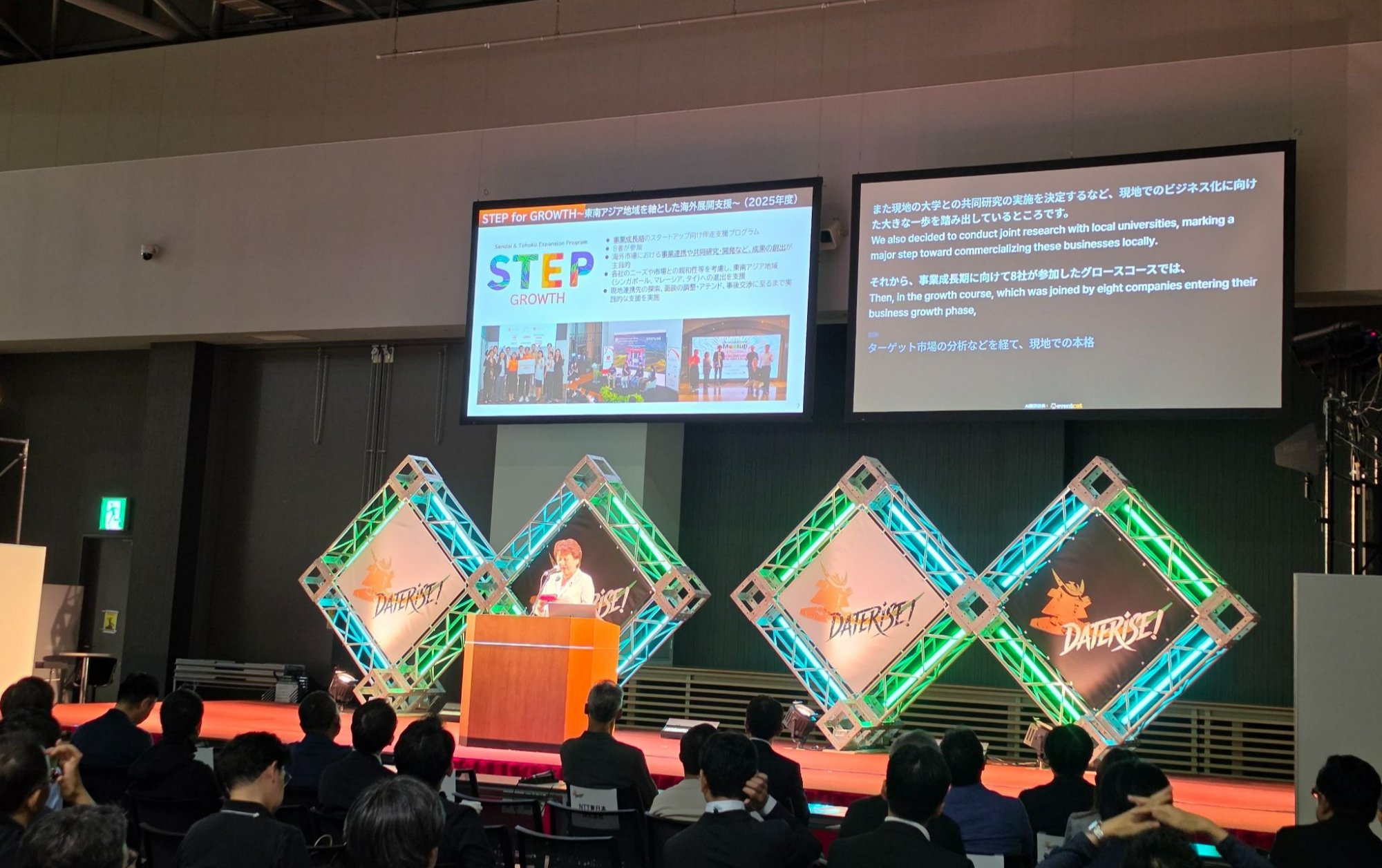
At DATERISE! 2026, held at the Sendai International Center in Miyagi Prefecture, EventCAT served as an official event sponsor and provided real-time AI interpretation and live multilingual captions across two concurrently operated stages. During DATERISE! THE PITCH, 10 startups presented to domestic and international investors and judges, with Japanese presentations translated into English in real time. Speakers could follow translated captions on dedicated stage monitors during Q&A, while attendees viewed captions on large venue screens or their own devices. EventCAT also pre-loaded presentation materials, company names, and specialized terminology from fields such as deep tech, space, biotech, and IP strategy to improve translation accuracy. The event demonstrated how multilingual startup sessions can be operated efficiently even without separate interpretation booths or simultaneous interpreters.
Looking at these four events together, a pattern emerges about when AI interpretation actually makes a difference.
The deciding factor is not the number of attendees or the size of the venue. It is whether participants who do not understand Japanese need to respond on the spot. For a talk the audience only listens to, translated materials distributed afterward may be enough. But the moment questions, business discussions, or networking enter the picture, how quickly someone can respond begins to shape the outcome. A prime minister's address, a conversation between executives that sits closer to casual talk, a pointed question from an investor, in this respect, none of them differ.
From Language Support to Communication Infrastructure
Supporting Japanese effectively requires more than simply adding “Japanese” to a list of available languages. Real conversations contain product names, acronyms, imported English terminology, industry-specific expressions, honorific language, and references whose meaning may depend heavily on context.
EventCAT is designed around this real-world environment. Real-time captions can be delivered to venue screens or personal devices, while terminology and contextual tools can help adapt the system to specific companies, industries, speakers, and events.
This becomes particularly important in Japanese business environments, where company names, technical terminology, content titles, and proper nouns may need to follow precise forms.
Japanese Is Becoming a Multilingual Business Language
For many years, Japanese was primarily associated with communication inside Japan.
Today, that is changing.
Japanese is increasingly being used in international startup ecosystems, global investment events, academic conferences, technology exhibitions, and multinational business meetings.
As these environments become more multilingual, real-time interpretation is evolving from an optional service into essential communication infrastructure.
The experiences across Startup JAPAN EXPO, SusHi Tech Tokyo, ASTEEDA Executive Salon, IVS Kyoto, and U-KNOCK also reflect a broader change in international events in Japan.
Multilingual communication is gradually becoming part of the infrastructure required to connect Japanese speakers with international participants. As more investors, researchers, entrepreneurs, creators, and companies interact across borders, the ability to make communication accessible in real time becomes increasingly valuable.
Key Takeaways
Japanese combines three writing systems, contextual sentence structure, honorific language, foreign terminology, and frequent omission of information that listeners infer from context.
Global interest in Japanese continues to grow, with the JLPT reaching a record 1.94 million applications worldwide in 2025.
Japan itself is becoming increasingly multilingual, with more than 4.12 million foreign residents and a record 42.68 million international visitors in 2025.
EventCAT has supported or demonstrated multilingual communication at Startup JAPAN EXPO 2026, SusHi Tech Tokyo 2026, ASTEEDA Executive Salon 2026, IVS Kyoto 2026, and U-KNOCK 2026 in Japan Summit.
EventCAT can deliver real-time Japanese interpretation and multilingual captions through venue screens, speaker displays, and QR-based personal access.
EventCAT helps Japanese speakers and international audiences communicate in the same moment, whether they are meeting one-to-one, participating in a panel, pitching a startup, or joining a global conference.
Visit www.EventCAT.com to discover how EventCAT supports real-time Japanese interpretation and multilingual communication for meetings, conferences, exhibitions, and global events.
Related Post
EventCAT on the Road: Real-Time AI Translation Across Japan and Korea This October
Gianella Furino
AI Real-Time Simultaneous Translation Subtitles Applied to an International Wedding — A Case of a Korean-Japanese Couple’s Wedding
Declan
AI Translation Has a New Bottleneck. It Isn't the Model.
Rosa Lee