
AI Beyond the Research Lab: From Research to Academic Conferences
A Digital Humanist’s Perspective on the Potential of AI Interpretation
At an international academic conference attended by approximately 800 participants from 59 countries, how can AI interpretation go beyond “interpretation” and transform researchers’ “participation”?
At DH2026, the 2026 International Conference of Digital Humanities, EventCAT, an AI-powered real-time translation solution, was deployed on site while up to 11 sessions were held simultaneously.
The person who introduced and operated the solution was Professor Byungjun Kim, Assistant Professor of Humanities Informatics at the Graduate School of Korean Studies, The Academy of Korean Studies. Professor Kim has actively incorporated digital technologies into his research and teaching and has also developed research and educational methodologies for Global Korean Studies using large language models (LLMs).
For Professor Kim, AI is more than a tool for simply experiencing new technology. He sees it as a research tool that can be directly applied to research and education while allowing researchers to explore both its possibilities and limitations.
This experience with AI extended beyond the research lab to the international academic conference setting. At DH2026, AI interpretation was used not only for academic presentations and Q&A sessions, but also for performances and welcome events, with the goal of lowering language barriers for participants.
After spending approximately two years testing various AI interpretation solutions and eventually operating AI interpretation at DH2026, we spoke with Professor Byungjun Kim about why he chose AI interpretation and the possibilities he discovered through his experience at the conference.
Could you briefly introduce yourself?
I am Byungjun Kim, an Assistant Professor at The Academy of Korean Studies. At DH2026, I introduced AI interpretation to help participants communicate smoothly in a multilingual environment.
Previously, I worked as a Research Professor at the Center for Digital Humanities and Computational Social Sciences at KAIST. I currently conduct research in Digital Humanities and computational social science.
How do you typically use AI in your research and teaching?
I actively use AI in both my research and teaching. In addition to traditional humanities research, such as analyzing literary works, I also apply digital technologies such as vibe coding and data analysis to my research.
I believe that rather than simply prohibiting students from using AI, it is more important to help them learn how to use it properly. For example, I have supported students with their AI subscription costs and provided shared access to services such as Claude Max so that they can directly experience both the possibilities and limitations of AI.
What has been the biggest change AI has brought to research and education?
In the past, students had to search through books or academic papers themselves. Now, I think we have created an environment where students can ask generative AI questions whenever they want and explore the information they need on their own.
However, even when using the same AI, it is important to use it based on one’s own knowledge and capabilities. AI should not create expertise for the user. Instead, it should help people make more effective use of the capabilities they already have.
I also find myself relying on AI at times. I actively use it for routine administrative tasks and document work, but when it comes to core research where I need to maintain control and direction, I try to remain at the center of the process.
What was the decisive reason for introducing AI interpretation at DH2026?
We introduced AI interpretation to expand opportunities for researchers who wanted to present their research in their own language rather than in English.
DH2026 is an international Digital Humanities academic conference held on a rotating basis across different continents. During the process of bringing the conference to Korea, one of the organizing committee’s goals was to provide researchers with opportunities to present in a multilingual environment.
Although English was the official presentation language, not every researcher is most comfortable communicating in English. We introduced AI interpretation to create an environment where participants could share their research and perspectives more comfortably.
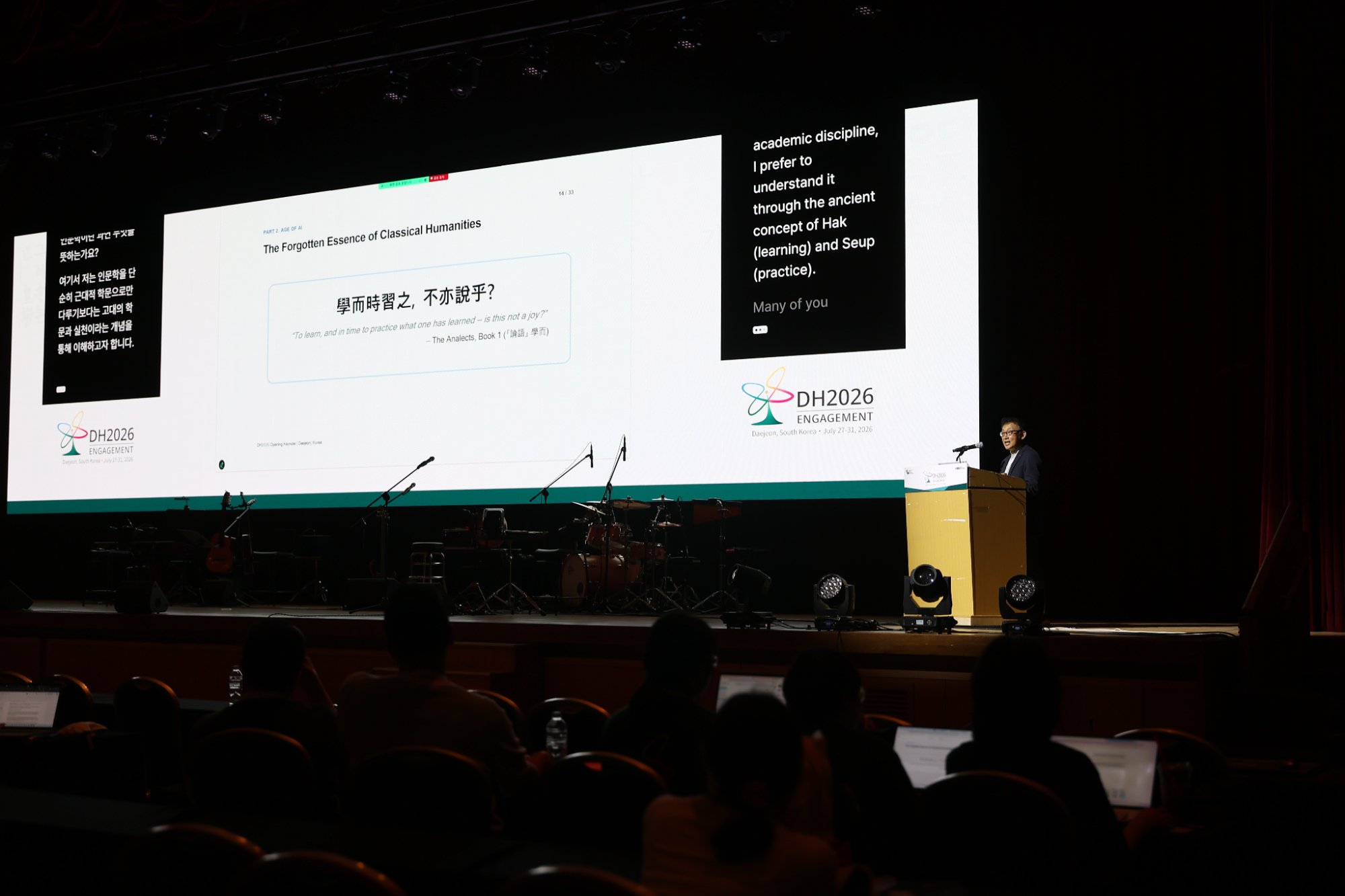
In what situations was AI interpretation used during the actual conference?
Real-time translation and subtitles were provided not only for academic presentations, but also for performances by Korean singers, pansori performances, welcome events, and announcements and remarks by the emcee.
Initially, we expected AI interpretation to be used mainly for academic presentations and Q&A sessions. However, once we actually operated it, we found that there were many more areas where it could be applied than we had anticipated.
It was also useful for conveying Korean-language performances and event content to international participants. This was an application we might not have anticipated if we had thought of AI interpretation simply as a tool for presentations.
What were your biggest concerns when introducing AI interpretation to an international academic conference for the first time?
The biggest concern was whether we could actually trust it and rely on it.
At an international academic conference, interpretation is not simply an additional feature. It needs to accurately convey questions and answers between participants, so accuracy and reliability were the most important factors for us.
That is why, after DH2026 was confirmed, we spent approximately two years, beginning in 2024, testing various AI interpretation solutions. We tested them at actual academic conferences and other events, gradually building our confidence in the technology.
On-site operation was another important consideration. Unlike an online service, an international academic conference can encounter unexpected issues on site, so it was important to know whether those issues could be addressed immediately.
The fact that EventCAT could provide on-site setup and operational support in Korea was also an important factor in our decision.
When was AI interpretation most useful at DH2026?
I think it was most helpful during the Q&A sessions.
Presentations can be prepared in advance, taking language differences into consideration. You can prepare your presentation materials and practice repeatedly, which makes it possible to present in English.
Q&A sessions are different. After a presentation, attendees ask questions spontaneously, and the speaker then has to organize and deliver an answer in English on the spot. That creates an additional burden.
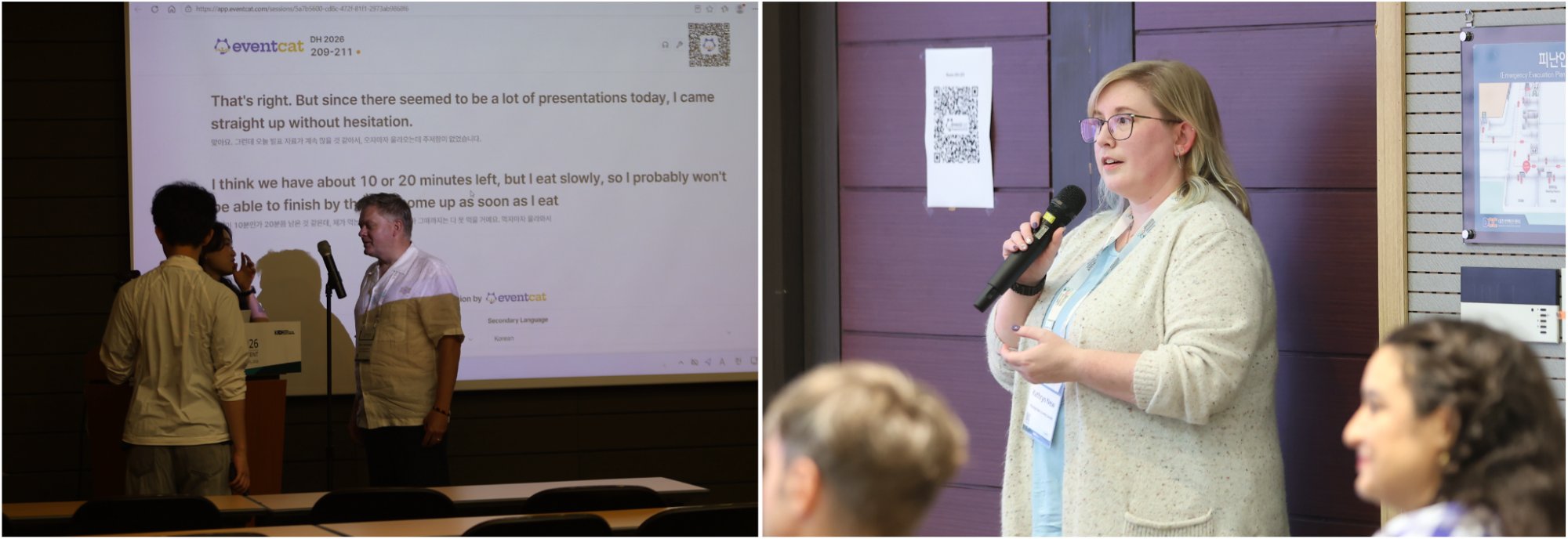
In these situations, AI interpretation and real-time subtitles allowed attendees and presenters to engage in Q&A in their own languages without worrying as much about the language barrier.
What was the most disappointing or challenging aspect of using AI interpretation?
Since this was an international academic conference, there were many proper nouns, including presenters’ names and various terms from abstracts. It is important for these terms to be recognized accurately and reflected correctly in the translated subtitles.
However, they were not always recognized perfectly, so I think this is an area that still needs improvement.
As global interest in Korean Studies continues to grow, what role can AI interpretation play in this trend?
I think AI interpretation and translation technologies can help expand linguistic access to Korean Studies.
Global interest in Korean Studies is growing, but much of the academic information and research is still provided in Korean. Aside from English-language materials, researchers and learners from other linguistic backgrounds still face difficulties accessing resources related to Korean Studies.
In this regard, if AI interpretation and translation technologies can enable more people to access Korean Studies research and materials in their own languages, the opportunities to learn and conduct research in Korean Studies could naturally expand.
However, rather than simply translating languages, AI that can understand the specialized terminology and context of Korean Studies would be even more useful. If such technologies continue to develop, they could help turn growing interest in Korean Studies into actual learning and research.
How far can AI interpretation lower language barriers at international academic conferences in the future?
I think language barriers have already been reduced significantly. However, I don't think AI interpretation will completely eliminate the importance of English. Researchers often still write presentation materials and abstracts in English to share their research internationally.
Ultimately, AI interpretation is likely to reduce the pressure of having to be completely fluent in English rather than create an environment where English is no longer necessary.
In particular, AI interpretation can reduce the pressure of feeling that you need to be perfectly proficient in English in order to participate in international research collaboration and academic exchange.
Perhaps what technology changes is not “interpretation,” but “participation.”
Professor Byungjun Kim emphasized throughout the interview that AI interpretation played a particularly important role during Q&A sessions.
The experience at DH2026 demonstrated that AI interpretation can go beyond simply translating English into another language and instead create an environment where more researchers can present, ask questions, and participate in academic exchange in their own languages.
AI interpretation is not a technology designed to replace experts. Rather, it can help more people participate in research and communicate in their own languages. Furthermore, it has the potential to become a new form of academic infrastructure that helps Korean Studies reach more linguistic communities around the world.
XL8 aims to break down language barriers and enable deeper communication. Through EventCAT, we will continue working across diverse events and environments to help more people participate and connect without being limited by language.
Related Post
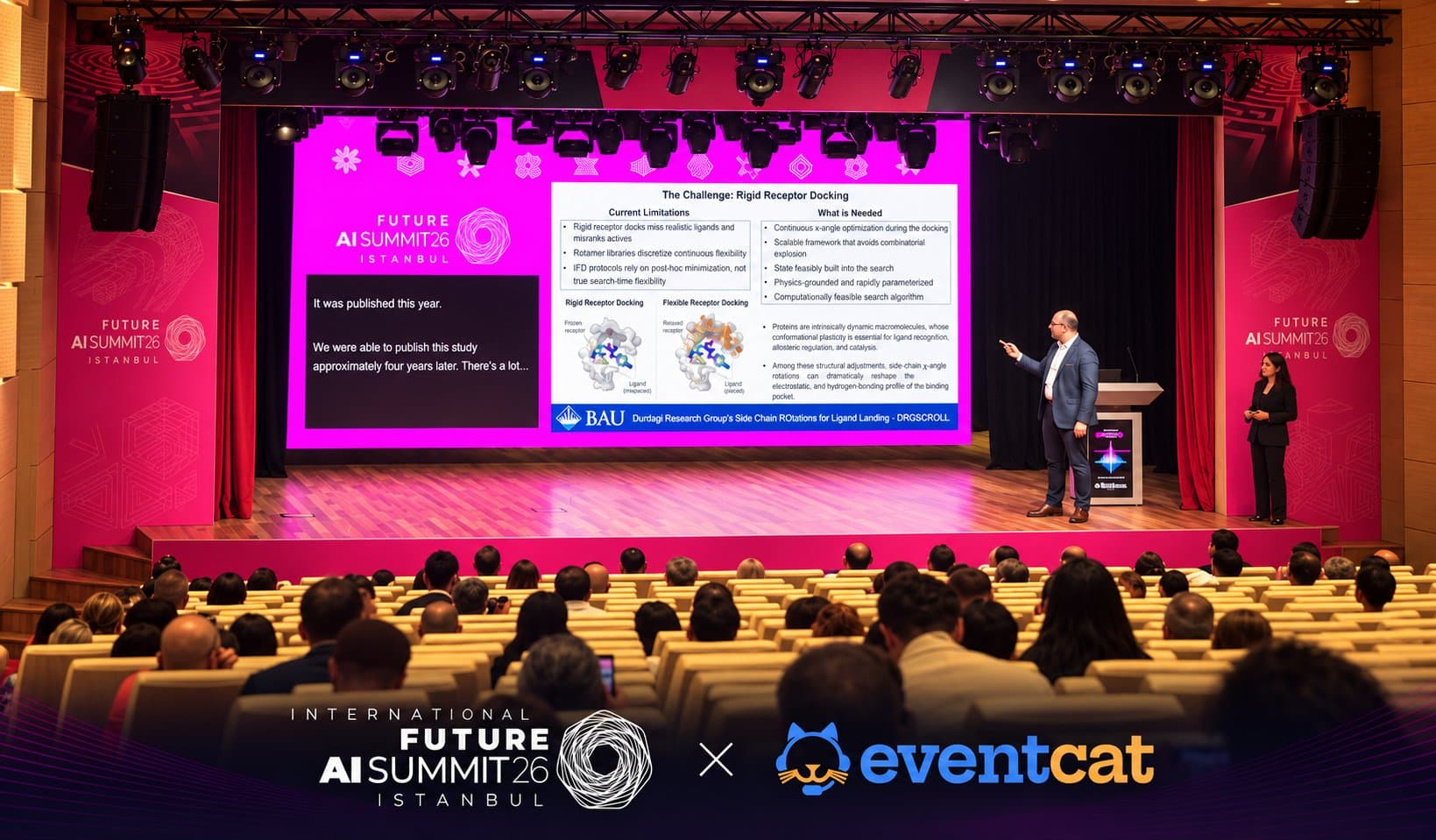
AI Translation for International Conferences: EventCAT at Future AI Summit 2026 in Türkiye
Gianella Furino
Why Real-Time Japanese Interpretation Matters for Global Events
Gianella Furino
EventCAT on the Road: Real-Time AI Translation Across Japan and Korea This October
Gianella Furino