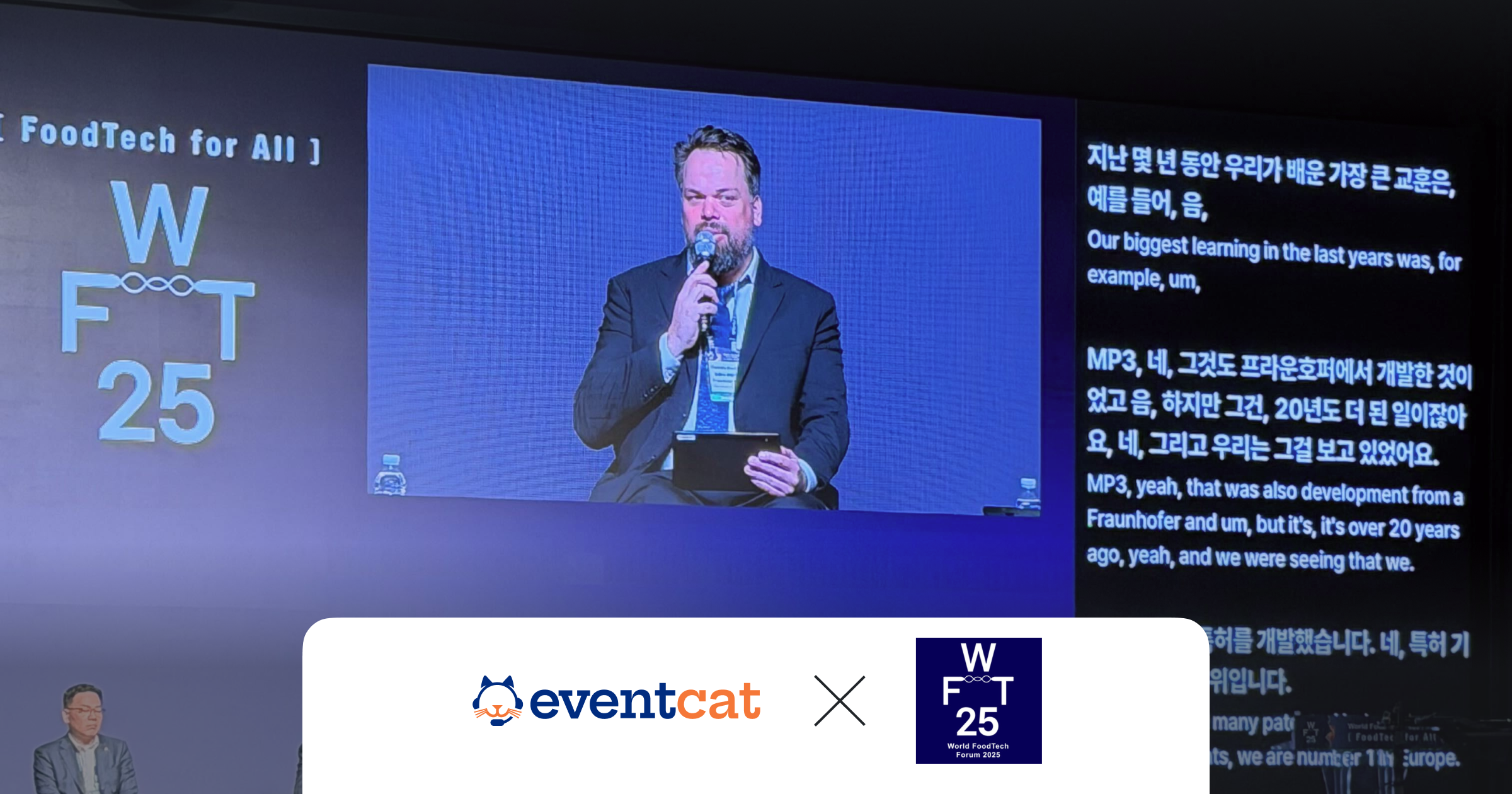
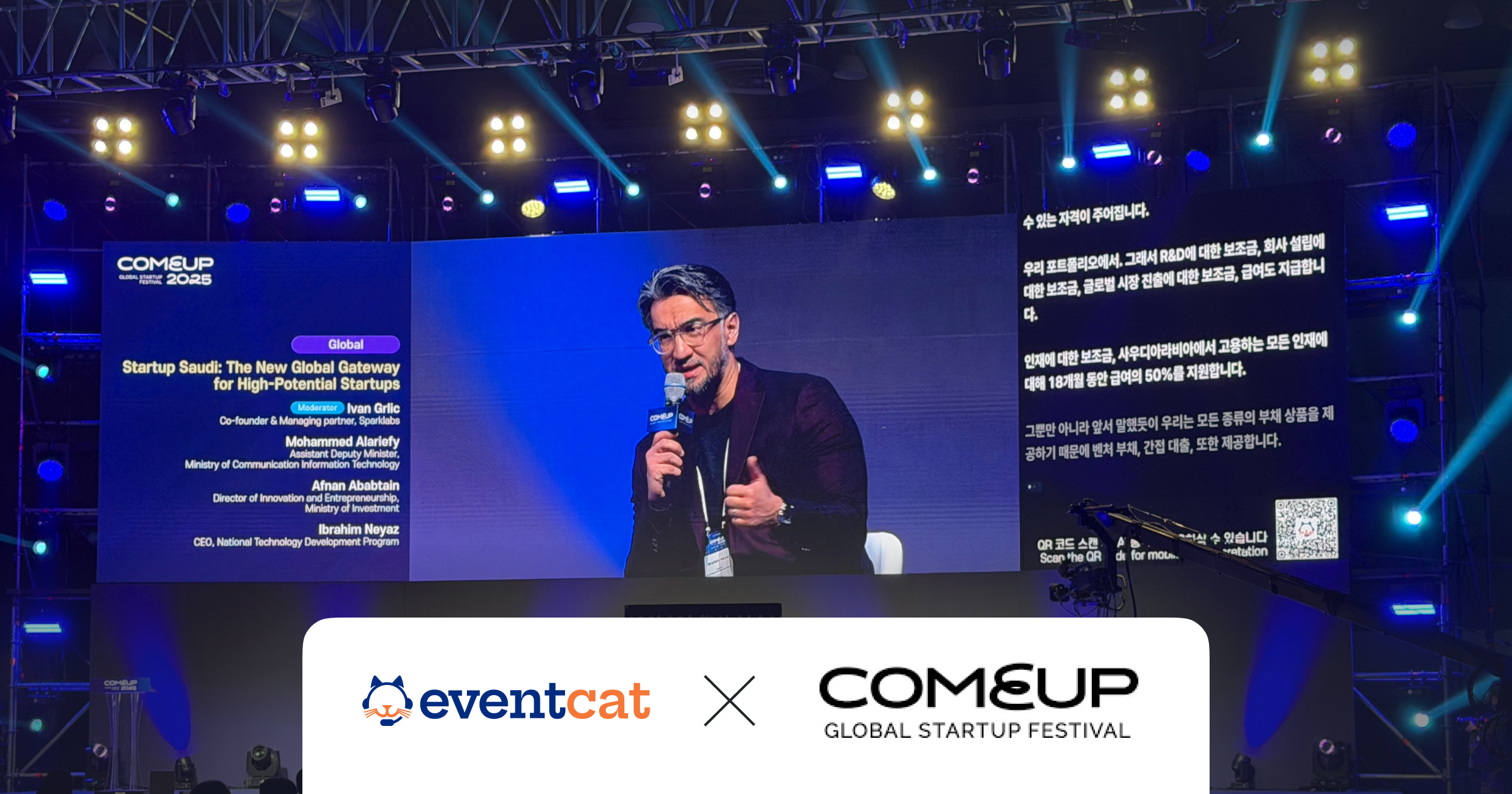
In recent years, universities have rapidly expanded international joint courses, Korean language programs, and global initiatives with the increasing number of international students. Language barriers are a major challenge in these courses, particularly when students from different countries participate in debates and team projects. These barriers often disrupt class flow and hinder active student participation.
Yonsei University addressed this challenge by introducing EventCAT, a real-time AI interpretation solution. During an online debate course led by Professor Hee-Chan Sim of Yonsei University and Professor Tanaka of Toyo University, students from Korea and Japan participated. EventCAT helped bridge the language gap, enabling smoother communication and more effective course management. This case illustrates how real-time AI interpretation can reduce the professor's workload and enhance student participation in international joint courses.
Yonsei University's Online Debate Course with Korean and Japanese Students
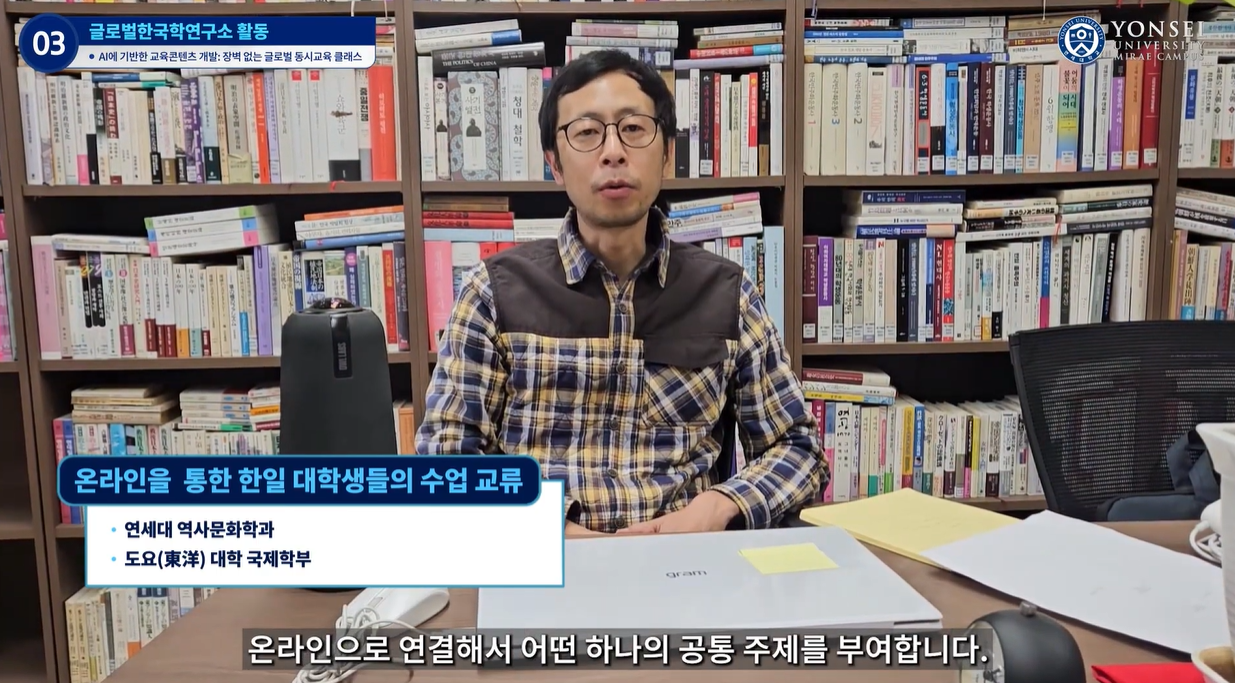
Yonsei University's Graduate School of Global Creative Convergence, in collaboration with Toyo University's Faculty of International Studies, conducted an online debate course as part of the Campus Asia initiative. The course involved students from Korea and Japan, requiring the overcoming of language barriers while maintaining class flow and encouraging active participation.
Language Barriers Encountered in Multilingual Classes
In the online classroom, 360-degree cameras allowed Korean and Japanese students to engage in face-to-face discussions despite being physically distant. However, understanding each other's comments in real-time was still a significant issue.
Professor Tanaka took on the role of sequential interpreter, but the speed and interaction typical of debate-style courses were difficult to maintain.
The main challenges in this teaching method were:
- Increased Burden on Professors
Professors had to manage both teaching the class and interpreting students’ comments, which added to their workload. - Interrupted Discussion Flow
The back-and-forth of interpreting each comment and translating it slowed down the natural rhythm of real-time debates. - Reduced Student Participation
Having to wait for the professor to interpret comments created a psychological barrier for students, making it difficult to express their opinions immediately.
International joint courses are not just about students from two countries joining the same online class. The real goal is to create an environment where students can engage in meaningful discussions despite language differences.
How Real-Time AI Interpretation Transformed Course Management
With the introduction of EventCAT in the later part of the semester, the communication between professors and students changed significantly. EventCAT provided real-time translation subtitles, making it easier for both students and professors to follow along.
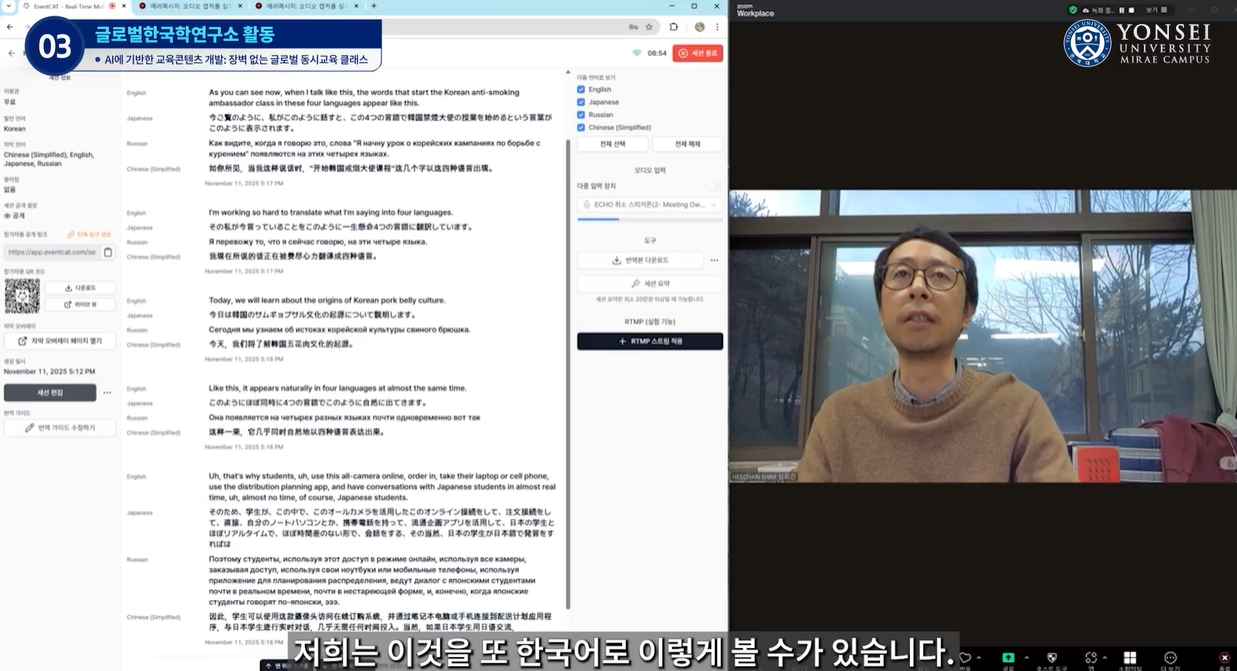
The key features of EventCAT that helped during the class were:
- Easy Setup, Reducing Operational Burden
Professors and students could access EventCAT via URL or QR code without any complicated installations. This low barrier to entry reduced technical difficulties and allowed smoother class operations. - Real-Time Korean and Japanese Subtitles for Easy Interaction
Real-time translation subtitles allowed students to follow their peers' comments in their preferred language. This not only helped with understanding but also facilitated smoother debates, enabling students to actively express their thoughts while maintaining the flow of discussion.
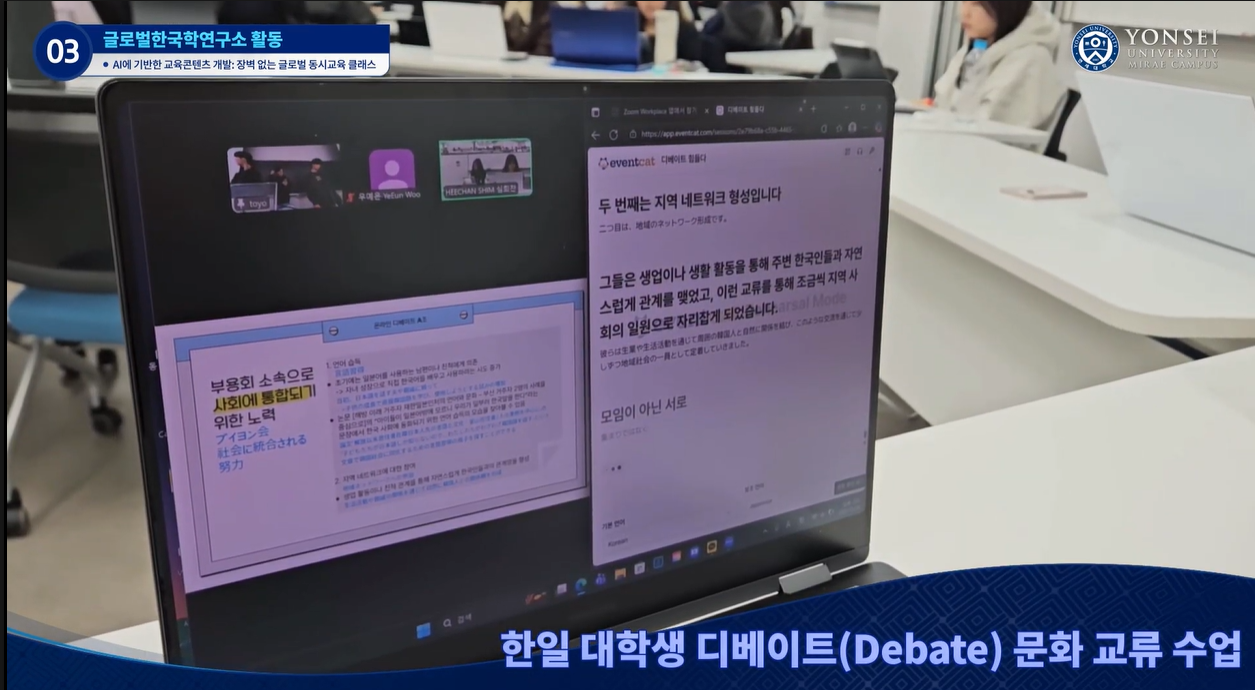
- Subtitles for Post-Class Review
All subtitles and discussions were available for download after the class. Professors could use these for course analysis, and students could review the materials. This feature provided an opportunity for further learning and self-reflection.
The Impact of Real-Time AI Interpretation at Yonsei University
Since the introduction of real-time AI interpretation, the course experienced changes beyond just translation convenience. The class's structure and the students' participation improved significantly.
- Smoother Debate Flow
With less time spent on sequential interpretation, students could engage in discussions more naturally, helping to preserve the rhythm and immersion crucial for debate-style courses. - Lowered Participation Barriers
Students no longer had to wait for the professor to translate comments, which allowed them to express their opinions more freely and participate more actively. This change greatly improved the student experience in international joint courses. - Increased Focus for Professors
Professors could now focus more on course design, prompting questions, guiding discussions, and observing student reactions, rather than focusing on interpretation. - Expanded Potential for International Joint Courses
Previously, international collaborative courses, especially COIL (Collaborative Online International Learning), were challenging due to language barriers. This case shows that real-time AI interpretation can reduce these barriers, making international collaboration, debates, and project-based learning more feasible.
Real-Time AI Interpretation: A New Possibility for International Joint Courses
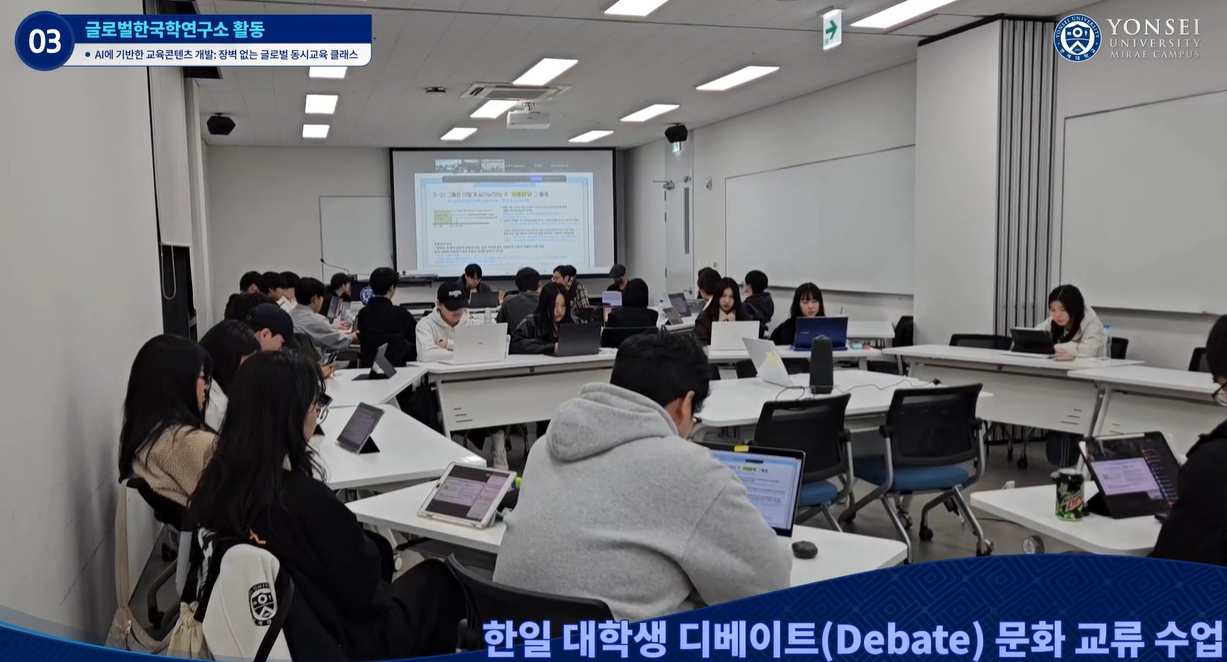
Yonsei University's case shows that international courses no longer rely solely on professors' foreign language skills or the availability of interpreters. Professor Hee-Chan Sim, who led the debate course, said, “The day when the term ‘domestic study abroad’ becomes a reality is not far off.”
This statement demonstrates that real-time AI interpretation goes beyond convenience. It creates an environment where students can learn and debate without language barriers.
Now, International Joint Courses Can Be Run More Flexibly
EventCAT supports over 50 languages through real-time AI interpretation subtitles, minimizing language barriers, reducing the burden on professors, and maintaining class flow and student participation. Subtitles saved after class offer valuable review materials for both professors and students, making multilingual classes easier to manage and more effective.
For classes with a high proportion of non-English-speaking students, joint courses with foreign universities, debate classes, or international student programs—where multilingual support is crucial—EventCAT offers a practical solution. It goes beyond simple translation, alleviating teaching burdens and improving the learning experience.
To support more educational environments in overcoming language barriers and expanding learning opportunities, EventCAT offers a 50% discount to educational institutions, NGOs, and non-profit organizations.
You can find additional case studies and examples of how EventCAT is used in various industries on our EventCAT blog.
For consultations or demos on how to apply EventCAT to your university’s classrooms or global programs, contact us at contact@eventcat.com.