Who Decides Which Language the World Speaks?
From the United Nations to global summits, discover how languages shape international influence and how EventCAT is helping global audiences understand one another.
Imagine an international summit where political leaders, business executives, researchers, and delegates from dozens of countries gather to discuss the world's most pressing challenges. Despite the diversity of languages represented in the room, many discussions take place in English. Nobody holds a vote to decide which language everyone should use. It's simply expected. But why English? Why not French, Mandarin, or Arabic? Who actually decides which language the world communicates in? The answer lies in centuries of history, political influence, economic power, and technology's growing role in international communication.
How Did English Become the World's Common Language?

Source: EF English Live
Languages don't become globally influential because they're easier to learn or more sophisticated than others. Their influence develops alongside the political, economic, and cultural power of the communities that speak them.
Throughout history, different languages have occupied prominent positions in international communication:
Latin: Used extensively in European scholarship, religion, and administration for centuries.
French: Historically influential in European diplomacy and international relations.
English: Expanded through British colonial influence and later through American economic, technological, and cultural power.
Today, English remains a widely used language in international business, science, diplomacy, and technology. However, its prominence raises an important question: does using one common language guarantee that everyone can participate equally?
Not necessarily. A delegate might have extensive knowledge of international policy but struggle to express complex arguments in a second language. Another participant might understand a speech but hesitate to ask a question because they're unsure how to communicate it. In these situations, language proficiency can influence whose ideas are heard most easily.
Six Official Languages, One Global Conversation
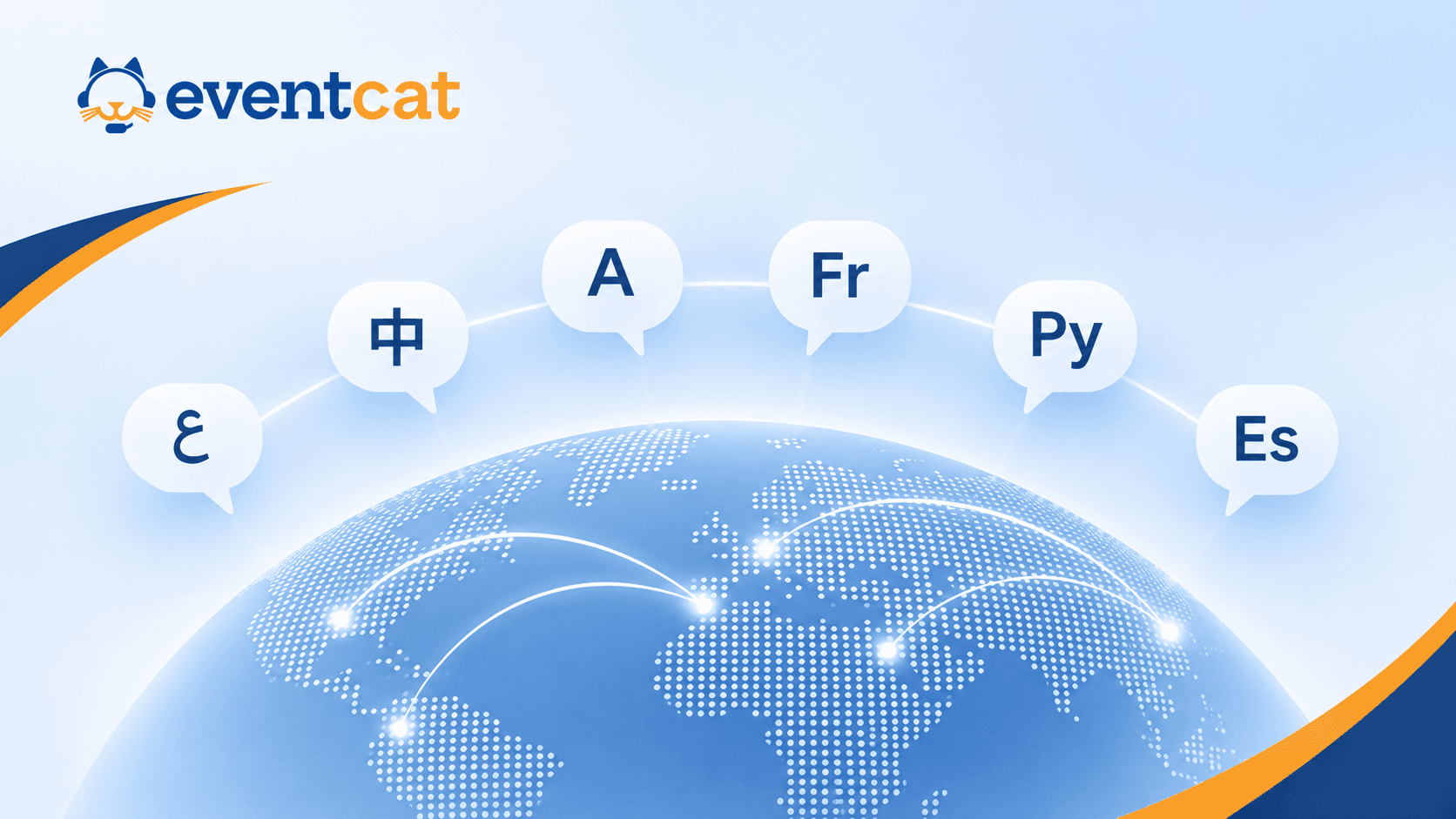
The United Nations offers one of the world's most recognizable examples of multilingual communication. It recognizes six official languages: Arabic, Chinese, English, French, Russian, and Spanish.
During multilingual meetings, professional interpreters help delegates follow discussions across these languages. This approach makes it possible to conduct international dialogue without requiring every participant to communicate exclusively in English.
Did You Know?
The United Nations has six official languages, but the world has thousands of living languages.
Interpretation is an essential part of many international meetings, not merely an optional convenience.
Multilingual access can help participants understand important information without relying entirely on their proficiency in another language.
But professional multilingual interpretation can require significant organizational resources, particularly when conferences involve several languages, simultaneous sessions, and large international audiences.
This is where AI-powered real-time interpretation is creating new possibilities.
EventCAT in Action: Supporting Communication at International Forums
EventCAT has already supported events where international leaders, government representatives, industry experts, and global audiences come together. These real-world examples demonstrate how AI live interpretation and multilingual subtitles can make international discussions more accessible.
1. GEEF 2026: Connecting Global Leaders Through AI Interpretation
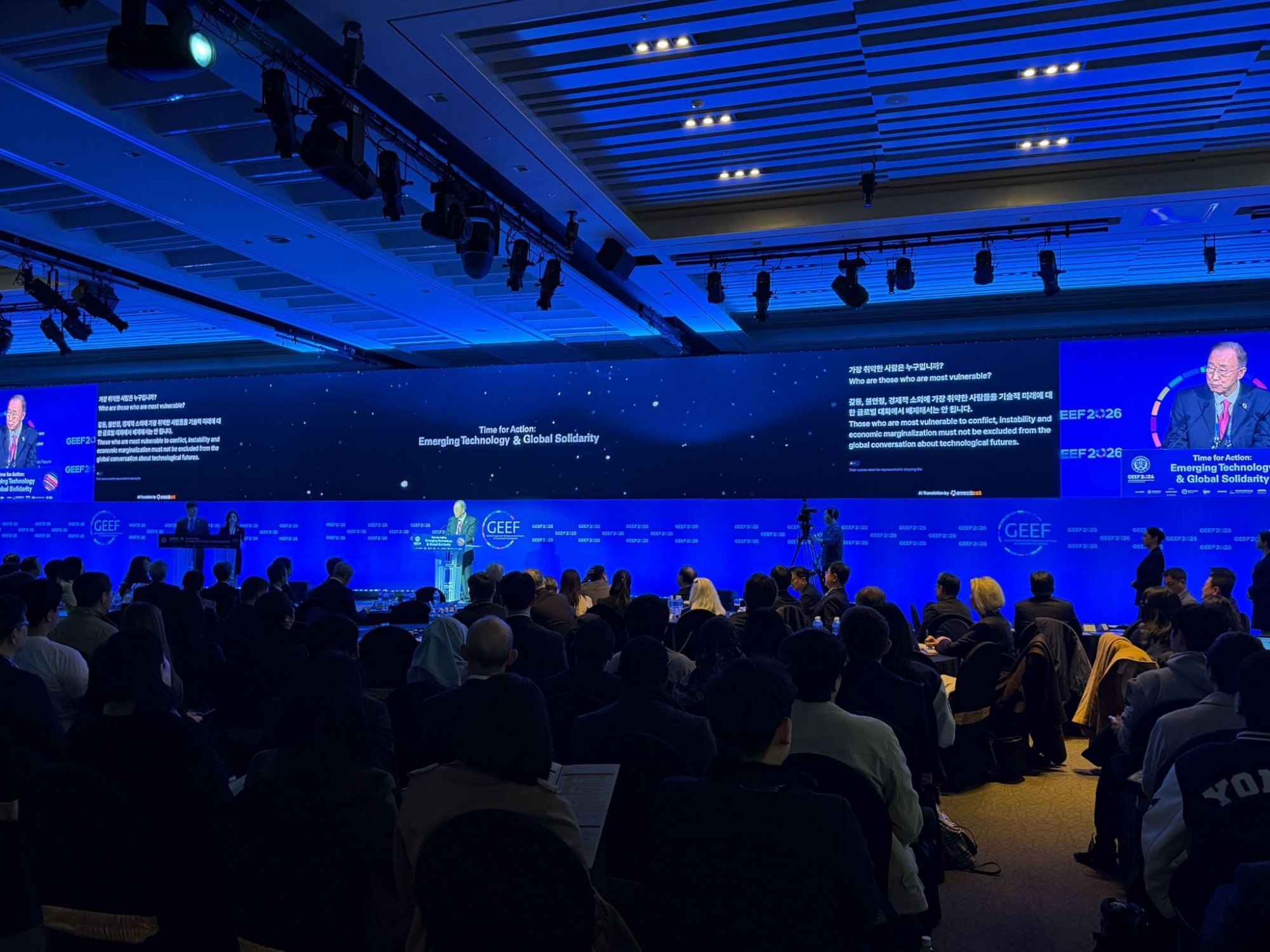
At the Global Engagement & Empowerment Forum (GEEF) 2026, held at Yonsei University in South Korea, international leaders and experts gathered to discuss emerging technologies and global solidarity.
The event featured prominent participants, including former UN Secretary-General Ban Ki-moon and former New Zealand Prime Minister Dame Jenny Shipley.
EventCAT supported the forum with real-time AI subtitles and interpreted audio, making presentations and discussions more accessible to multilingual attendees. Approximately 300 interpretation receivers were prepared for the event, while participants could also access translated content through their personal devices using QR codes.
2. SusHi Tech Tokyo 2026: Translating Speeches from Japanese Government Leaders
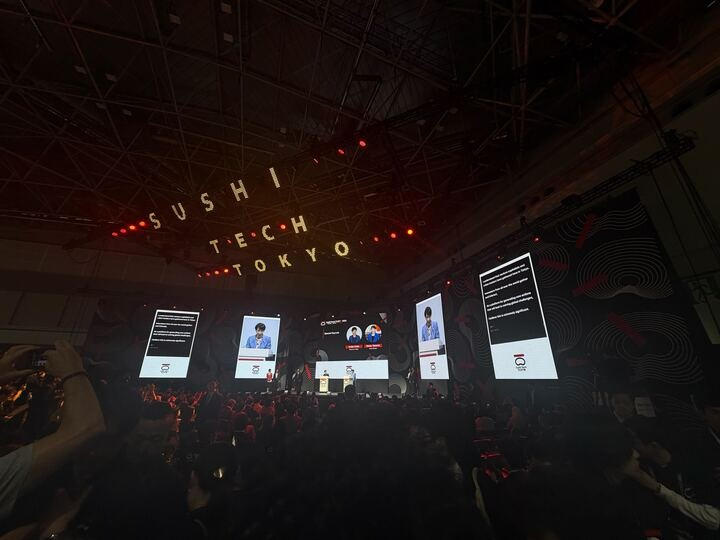
At SusHi Tech Tokyo 2026, EventCAT provided real-time translated subtitles across eight stages, including sessions featuring high-profile government representatives.
Among the highlights were speeches by Japanese Prime Minister Sanae Takaichi and Tokyo Governor Yuriko Koike. EventCAT helped international attendees follow important messages through English subtitles displayed on large screens.
This demonstrates how AI-powered live subtitles can support communication at major international events that bring together public officials, innovators, and audiences from different countries.
3. Maekyung National Vision Report: Connecting Policymakers and Foreign Ambassadors
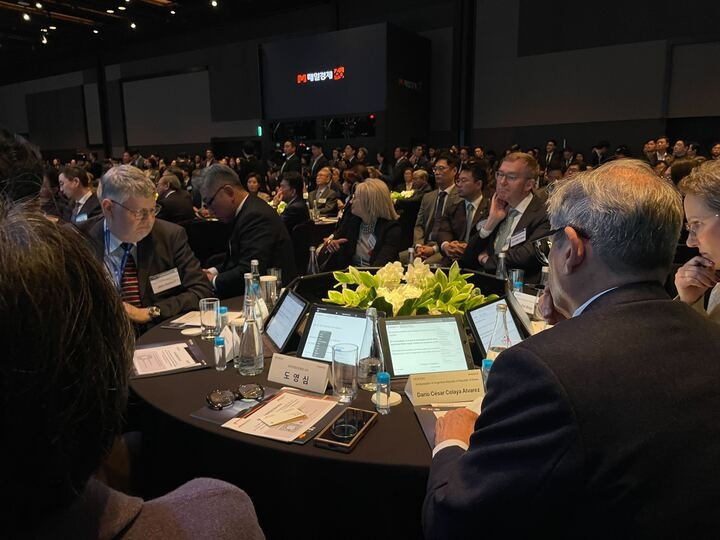
In Seoul, the Maekyung National Vision Report event brought together business leaders, policymakers, and foreign ambassadors to discuss global competitiveness and the opportunities emerging from the AI revolution.
EventCAT supported multilingual communication, helping participants from different linguistic backgrounds follow presentations in real time.
Together, these events demonstrate how AI interpretation can support international dialogue across institutional, economic, and public-sector environments.
Can AI Translation Change the Future of Diplomacy?
Quick Q&A
Q: Can AI interpretation replace a common international language?
A: Not entirely. Shared languages remain valuable for building relationships and understanding cultural nuances. However, AI interpretation can reduce the need for every participant to rely exclusively on the same language.
Q: How does EventCAT help international audiences?
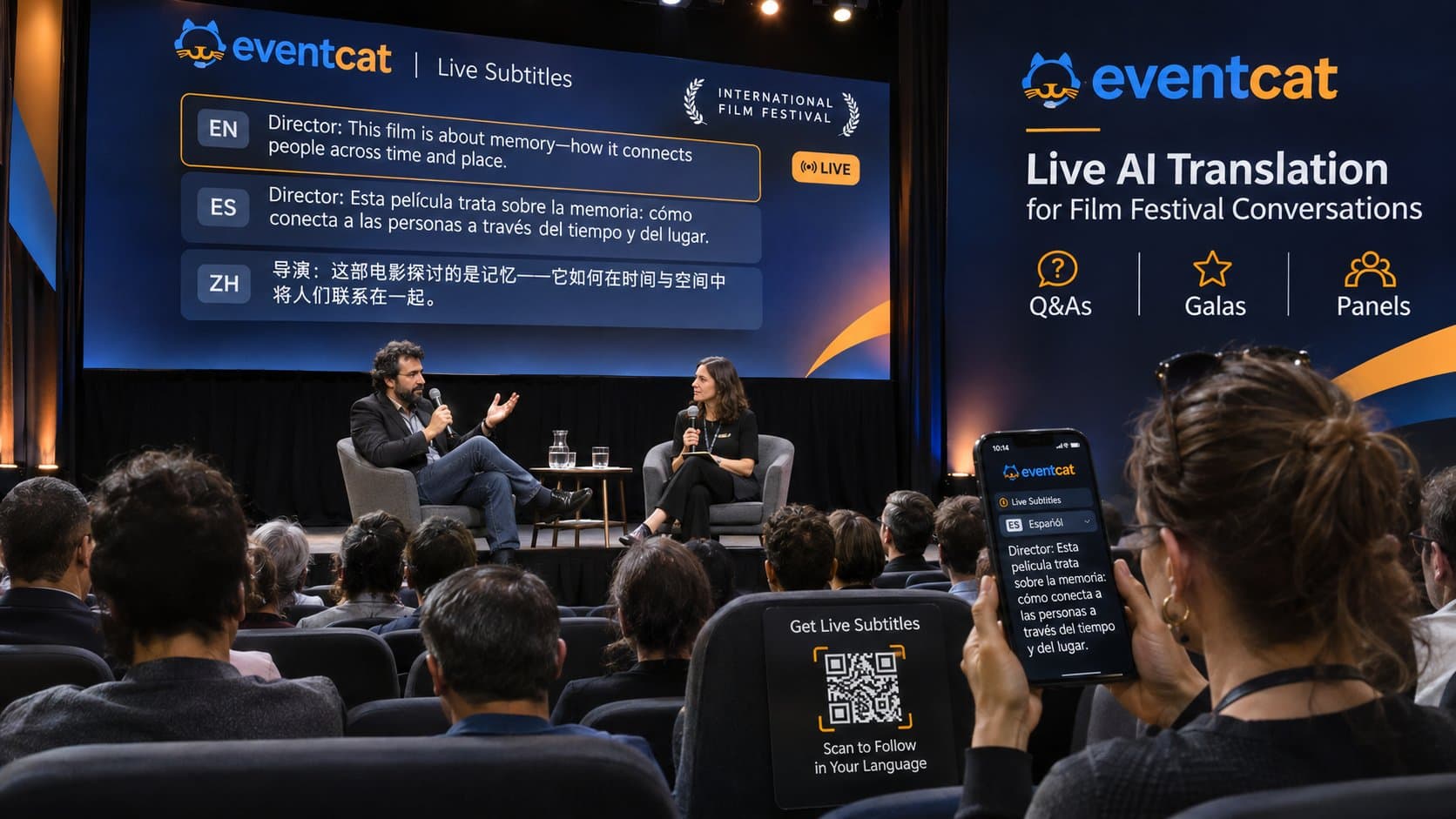
A: EventCAT provides AI-powered real-time interpretation through translated subtitles and audio. Depending on the event setup, participants can access translations through personal devices, QR codes, interpretation receivers, or large venue screens.
What If Global Communication Didn't Depend on One Language?
For centuries, participating in international discussions often meant adapting to the language of the most influential institutions. Today, technologies such as EventCAT are expanding the ways audiences can access information across languages.
From international forums featuring former world leaders to major technology conferences attended by government representatives, EventCAT is helping make multilingual communication more practical and accessible. The purpose isn't to replace the cultural importance of languages or the expertise of professional interpreters. It's to give more people the opportunity to understand and engage with conversations that matter.
Perhaps the future of international communication won't be defined by which language the world chooses to speak, but by how easily people can understand one another without having to speak the same language.
Discover how EventCAT supports AI-powered real-time interpretation for international conferences, global forums, and institutional events.