
Bridging Cultures Through Technology: How EventCAT Powered Global Dialogue at SAFT 2025
When the Seoul Foundation for Arts and Culture (SFAC) launched Seoul Arts & Future Talks 2025, better known as SAFT 2025, their goal was clear: to turn Seoul into a living laboratory where art, technology, and urban policy could meet and reimagine the future together. This was no small gathering. It brought together thought leaders from Ars Electronica, Creative Scotland, CINARS, and VibeLab, alongside professors and artists from Korea’s top institutions.
Why Language Became Both the Challenge and the Opportunity
With such a diverse mix of voices, languages quickly became both a challenge and an opportunity. For SFAC, the question was how to make every insight, whether spoken in Korean, English, or German, instantly accessible without losing nuance or emotional depth. That’s where EventCAT came in.
EventCAT as the Invisible Connector
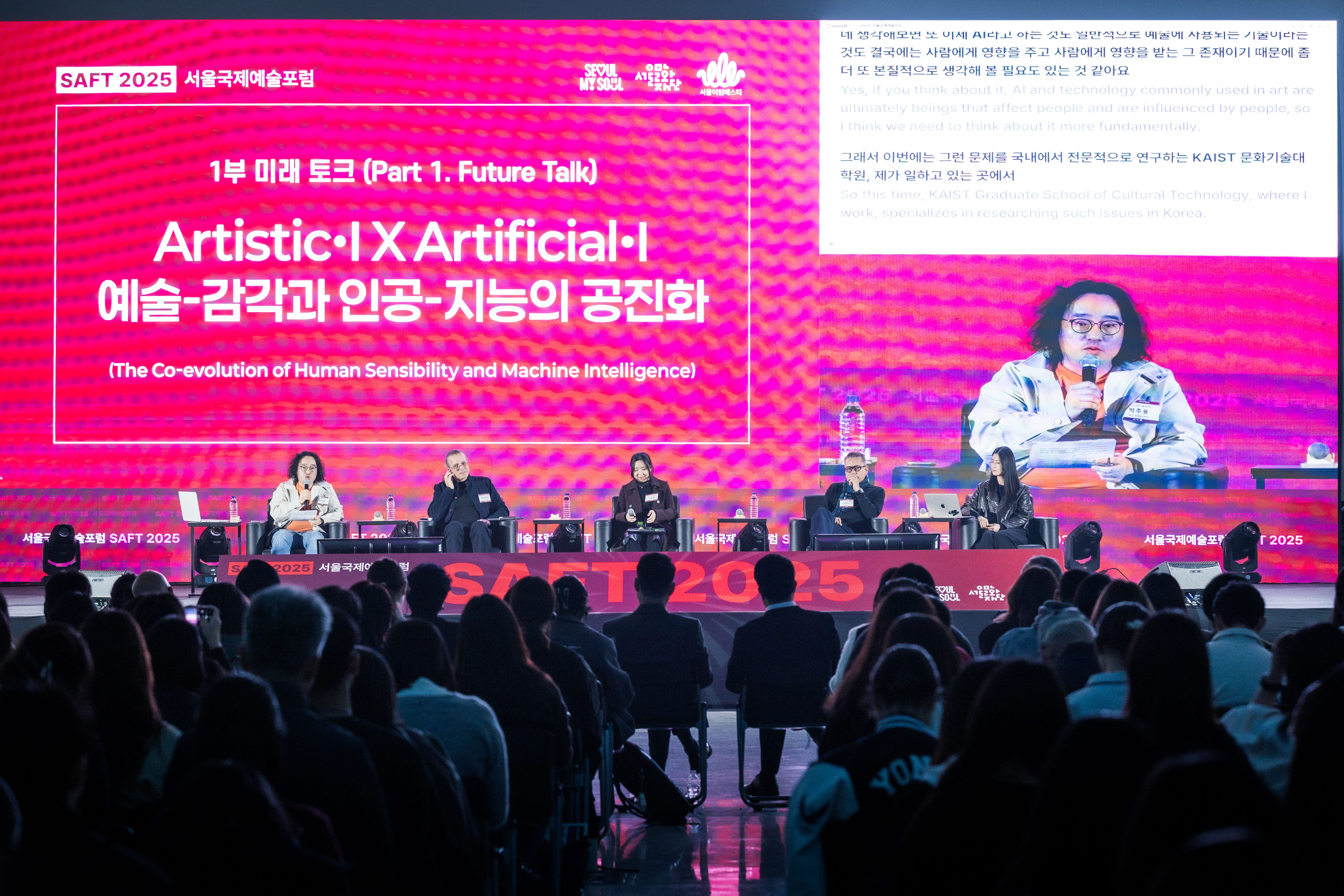
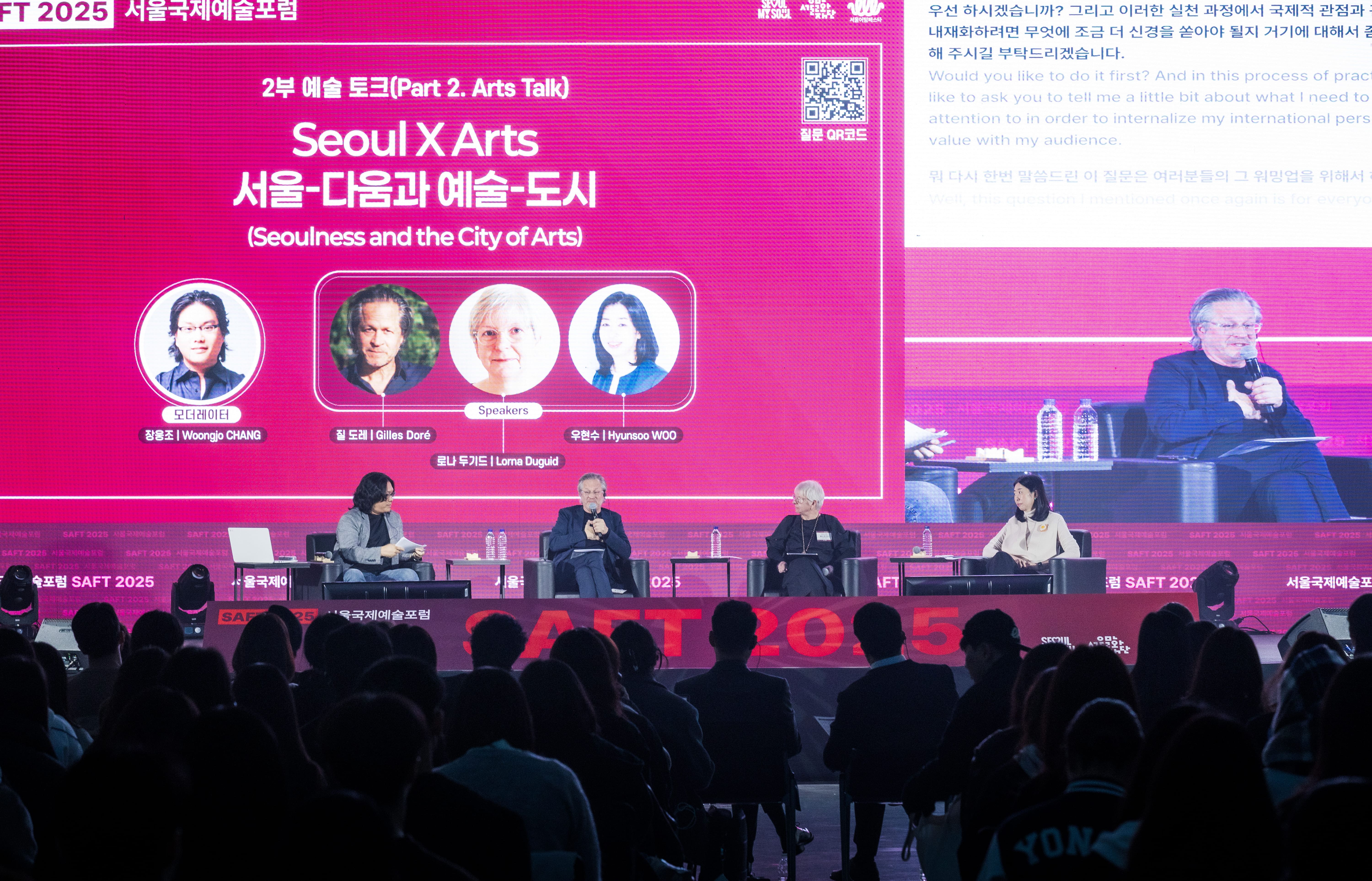
From the opening session “Artistic·I × Artificial·I” where AI and creativity converged, to the concluding panel on “Locality × Attraction,” EventCAT served as the invisible connector, delivering real-time interpretation and multilingual captions that enabled participants from across continents to engage without barriers. The forum unfolded around three main themes: the co-evolution of art and technology, Seoul’s growing role as a cultural hub, and new urban policies driven by creativity and community. Thought leaders such as Gerfried Stocker, Artistic Director of Ars Electronica; Hyunsoo Woo, former Deputy Director of the Philadelphia Museum of Art; and Lutz Leichsenring, Co-Founder of VibeLab, led conversations that bridged artistic innovation, cultural identity, and urban policy, each exchange powered seamlessly by EventCAT’s technology.
The Impact: Seamless Conversations and No Delays
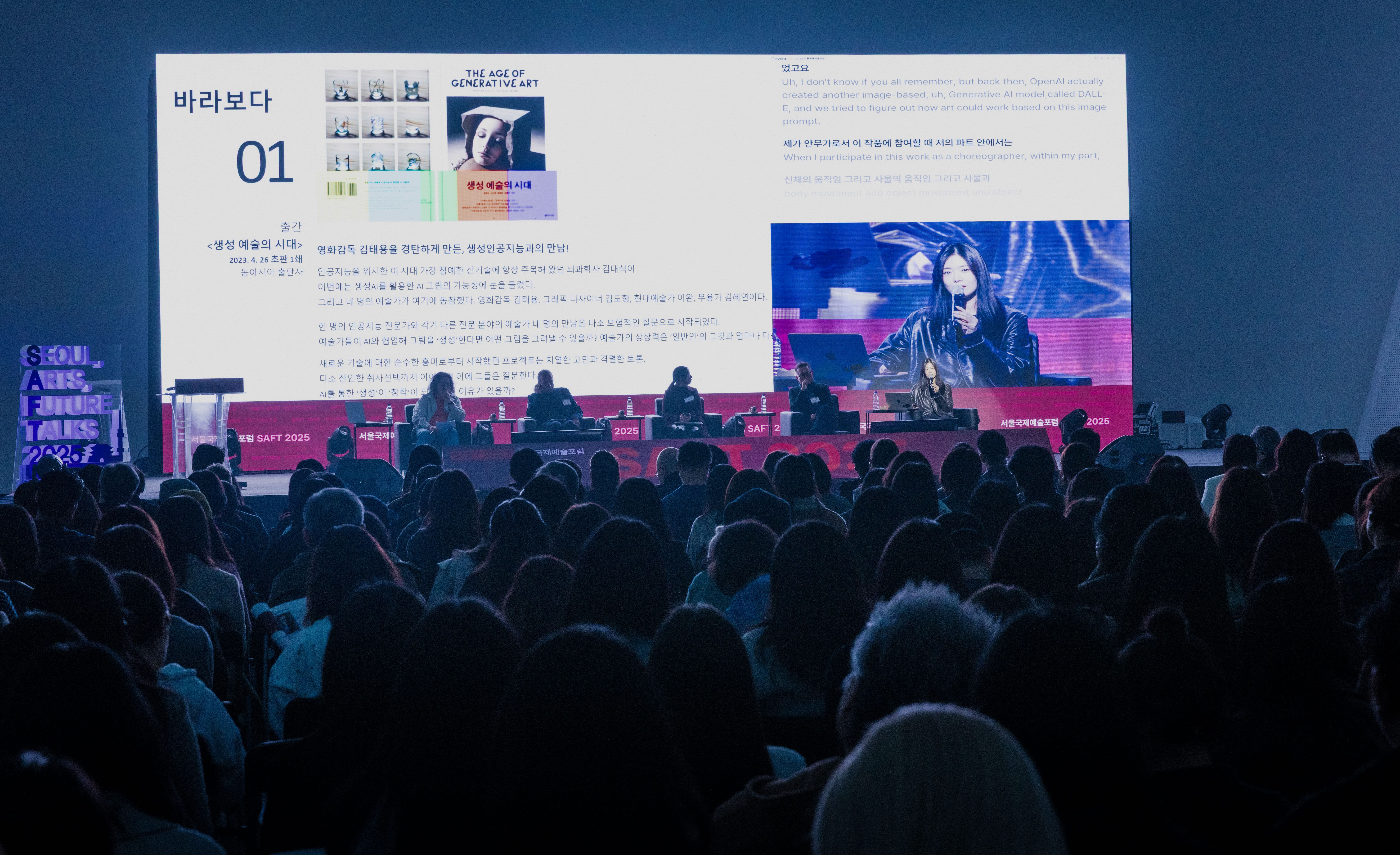
The impact was tangible. Conversations flowed naturally , and laughter translated across languages. International participants could engage without waiting for delayed interpretation or written summaries. EventCAT’s system handled rapid exchanges, technical terminology , and even spontaneous audience questions with remarkable precision. In a forum centered on the co-evolution of art and intelligence, the technology itself became part of the narrative—proof that smart tools can enhance, not replace, human connection.
A Partnership for a More Inclusive Dialogue
What made this collaboration stand out wasn’t just the technology; it was the shared mindset. SFAC saw EventCAT not as a service provider, but as a creative partner in building a more inclusive platform for cultural dialogue. Together, they turned SAFT 2025 into more than just a conference: it became a demonstration of how accessibility and innovation can coexist in the arts.
The Role of EventCAT in Seoul’s Global Positioning
As Seoul positions itself as a global cultural city , this event set a precedent for how future international exchanges can unfold—fluidly, inclusively, and powered by the right technology. EventCAT’s role at SAFT 2025 wasn’t just about translation; it was about giving every idea a shared voice , ensuring that dialogue across borders remains as vivid and dynamic as the art that inspires it.
On-Site Multilingual Experience: How We Prepared for It
Locking Meaning with Glossary
Before the event, we pre-registered brand names , institution names , and technical terms into the EventCAT glossary. This ensured that even as sessions changed, the meaning stayed consistent, with the same terms used across all languages.
Maintaining Quality in Parallel Sessions
Despite frequent side-stage and panel transitions, we kept the sync and density of subtitles and audio consistent across sessions. As a result, audience engagement remained seamless, and question-answer rhythms didn’t get lost.
Simplifying Equipment and Workflow
By reducing booth installation and staffing dependency , we minimized on-site equipment requirements. This allowed the operations team to focus on content delivery and audience experience , rather than technical logistics.
Measuring the Impact: Key Results
Engagement
The number of questions per session and audience interactions increased, with response times improving significantly.
Understanding & Satisfaction
Post-event surveys showed a marked improvement in comprehensibility and accessibility , with participants finding the event more intuitive and engaging.
Operational Efficiency
Session transition delays and translation-related tickets decreased, and schedule adherence improved.
Consistency
Glossary adoption and consistency in terminology increased, reducing any meaning drift across sessions.
AI Interpretation at Events: FAQs
Q. Is AI interpretation reliable for offline events?
A. Yes. Glossary-based meaning locking ensures consistent handling of brand names and technical terms across languages. Pre-event rehearsal helps fine-tune sync and display rules to reduce live risks.
Q. How many languages can EventCAT support simultaneously?
A. EventCAT supports up to 50 languages. With multiple tracks, AI-based interpretation and subtitles can scale, offering seamless translation across sessions.
Q. Are human interpreters necessary for some sessions?
A. Yes. For sensitive or nuanced discussions like diplomacy, law, or politics, a hybrid (human interpreter + AI) setup is most effective. We recommend using human interpreters for keynotes and AI for breakout sessions to maximize scalability.
**How to make your next international event seamless and inclusive?
** EventCAT removes language barriers, connects global voices, and lets every idea resonate effortlessly. Discover how EventCAT can bring your global vision to life → Book a quick consultation.
Related Post
From Sebastian Thrun to David Cameron, Access Global Insights From the World Knowledge Forum Without Language Barriers
Declan
AI Translation for International Conferences: EventCAT at Future AI Summit 2026 in Türkiye
Gianella Furino
Why Real-Time Japanese Interpretation Matters for Global Events
Gianella Furino